Seam Tape Letting Go
Laps glued with older adhesive dry out and open at the edges. A finger slid under the lap finds the gap, and water follows it into the insulation below.
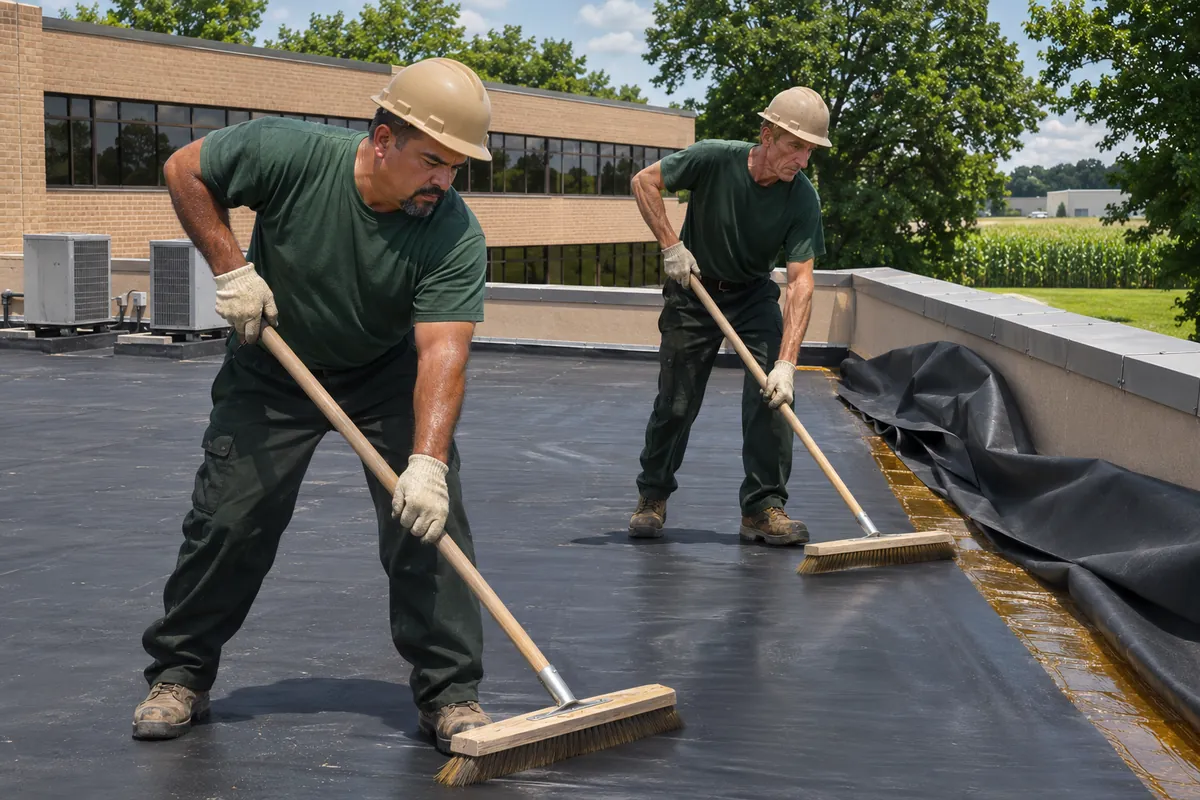
As an Evansville EPDM roofing contractor, we install black rubber membrane with taped seams on flat roofs over offices, schools, churches, and older buildings.
Evansville EPDM roofing suits flat roofs that move with the seasons and carry few penetrations. Here is where it fits and where other work comes first.
Older rubber roofs fail in a handful of predictable places.
Laps glued with older adhesive dry out and open at the edges. A finger slid under the lap finds the gap, and water follows it into the insulation below.
Rubber shrinks with age and pulls at parapet corners, tenting the flashing off the wall. That bridging tears at the corner and leaks during wind-driven rain.
Bolts that rusted or were never tightened leave the membrane loose in the drain bowl. Water runs under the sheet right at the lowest point of the roof.
Dropped screws and tools poke small holes that are hard to spot on a black surface. Leaks show inside near the units that get serviced most.
EPDM tolerates water better than many roofs, but long ponding still loosens seams and hides punctures. Low spots usually trace to crushed insulation or a settled deck.
Years of sun dry the surface into a fine web of cracks. New tape and patches stop bonding once that starts, which marks the roof for replacement.
These choices decide how the new rubber roof goes on and what it costs.
| Option | Choices | What Decides It |
|---|---|---|
| Membrane thickness | 45 or 60 mil | Expected service life and roof traffic |
| Attachment | Fully adhered, fastened, or ballasted | Deck type, wind exposure, and roof weight limits |
| Seams | Primer plus seam tape, cover strips at details | Lap length and weather on install days |
| Insulation | Polyiso with a cover board | Energy code and the drain layout |
| Flashing | Uncured EPDM at corners, cured at walls | Shape of curbs, pipes, and parapet corners |
Rubber roofs earn their place on older buildings with simple roof layouts.
EPDM stretches with the building through hard freezes and hot afternoons. Older masonry buildings that shift with the seasons keep a membrane that moves with them.
Sheets come in wide rolls, so a school or office roof has far fewer laps than a roof built from narrow sheets. Fewer laps means fewer places to inspect.
A puncture from a dropped tool gets cleaned, primed, and covered with a tape patch. Service techs can protect the roof with walk pads at every unit.
Adhered rubber adds little load, which matters on older wood or plank decks where heavier systems would need structural review first.
Tell us which wall or corner shows the tenting. Shrinkage at parapets usually decides whether the roof gets new flashing or a full replacement.
Each stage closes before the next opens, so the building stays dry.
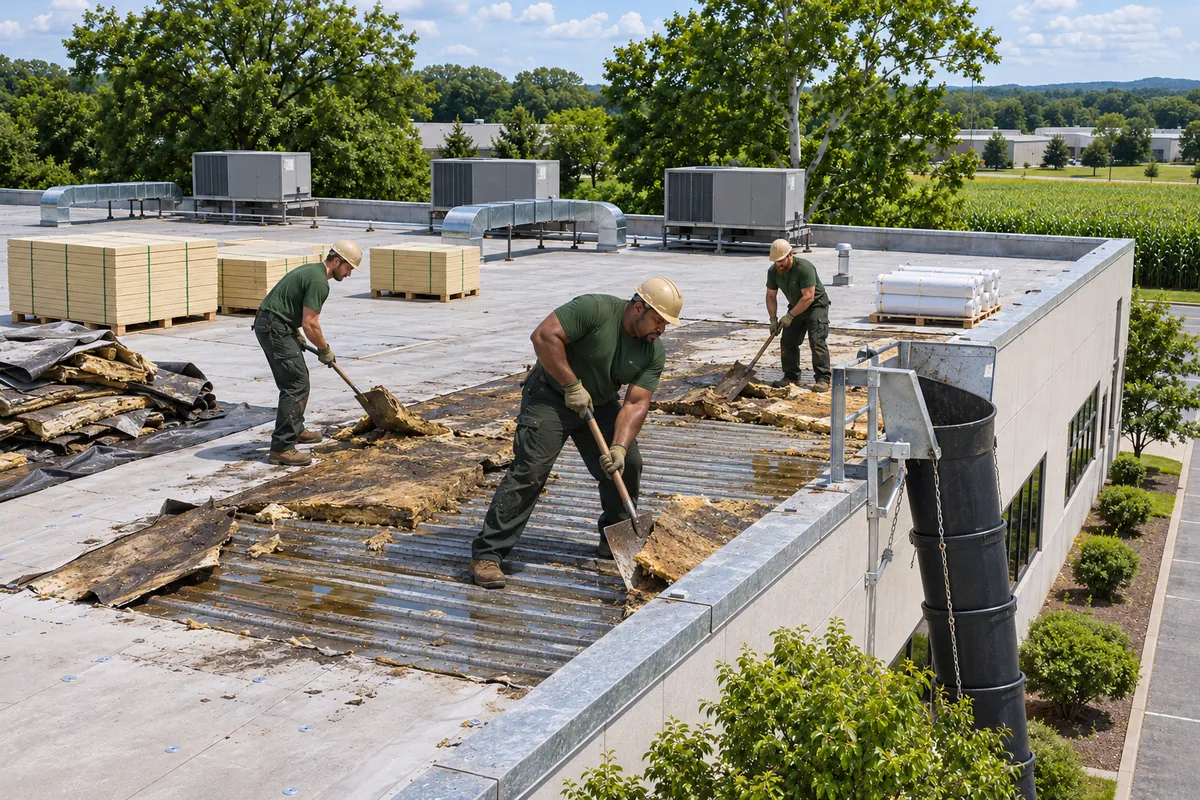
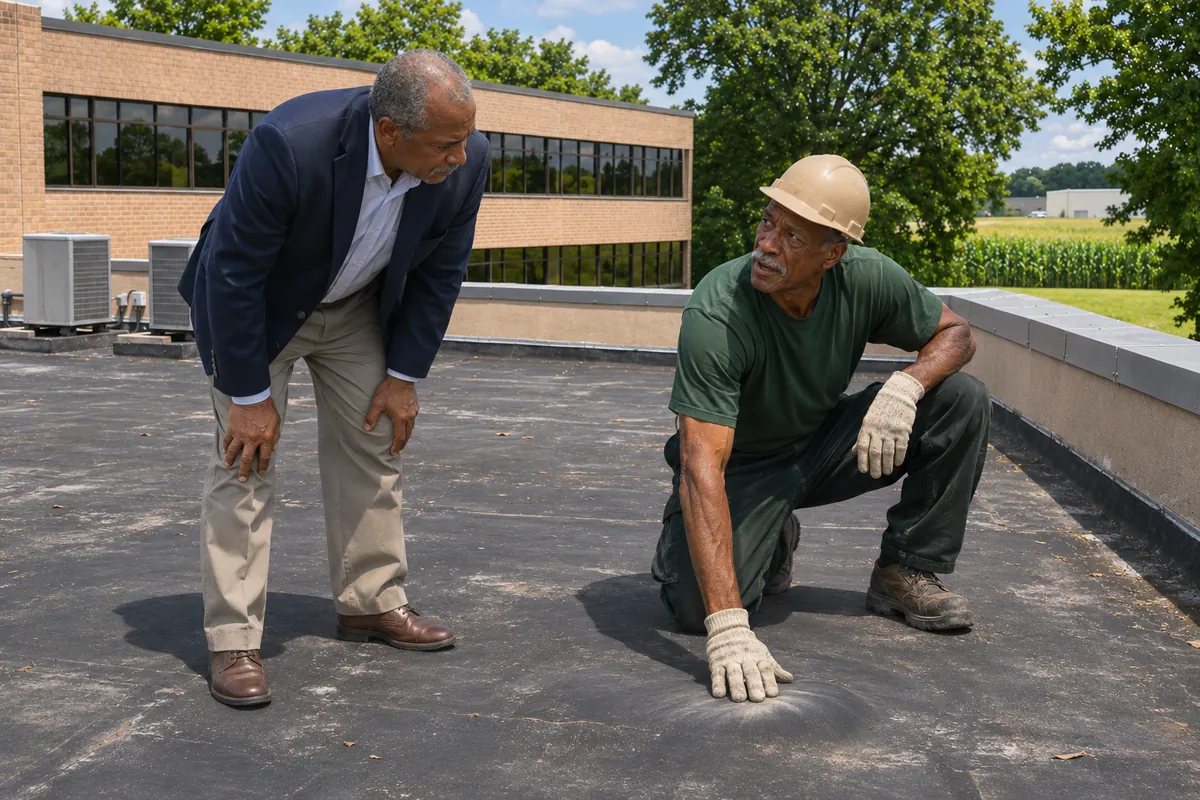
Moisture readings and cores show which insulation is wet. Shrinkage at walls and the state of the drains get photographed for your file.
Old rubber and wet boards come off in sections. Rusted steel or soft plank gets replaced before anything new goes down.
New insulation and cover board go down, then wide EPDM sheets. Every lap is cleaned, primed, and taped, with cover strips at the ends.
Corners, pipes, and drains get uncured flashing and new clamping rings. A last pass checks every lap and detail before the area closes.
If a rubber roof is a poor match for the building, these are the next options.
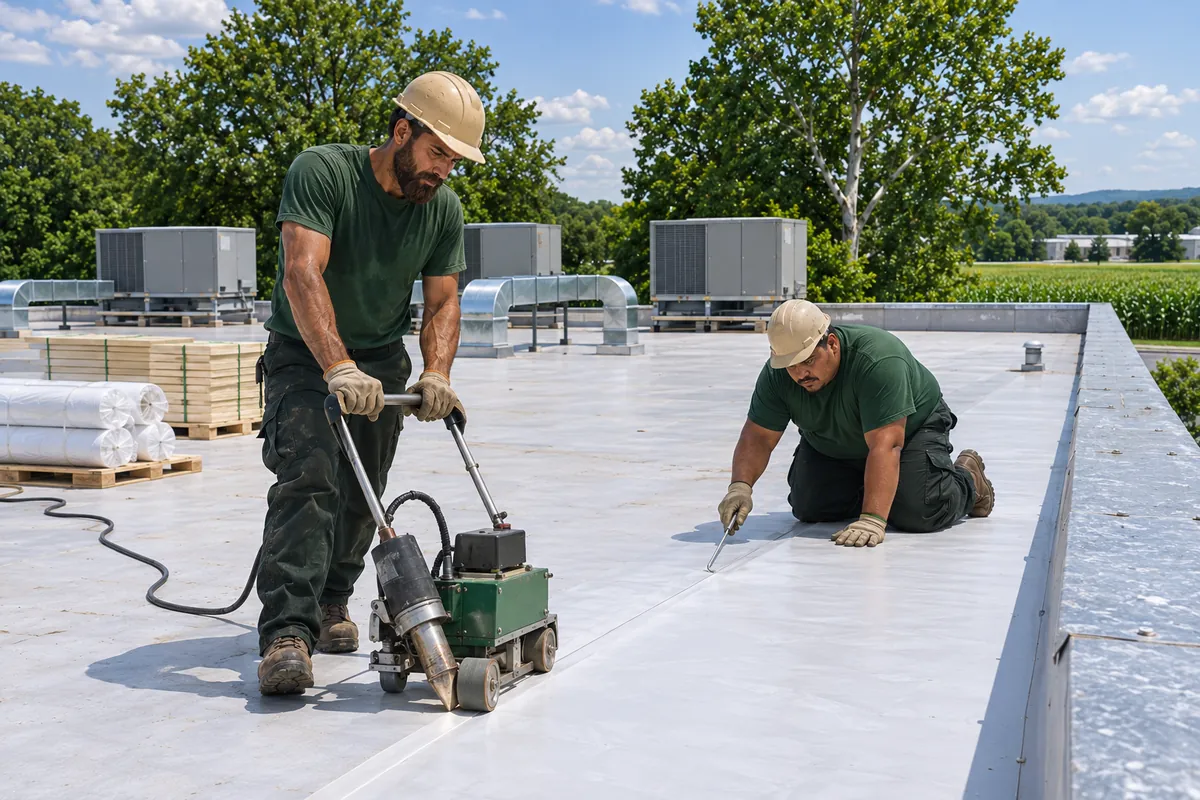
White TPO trades EPDM's stretch for welded seams and a cooler surface, a better fit for stores and offices with heavy cooling loads.
Evansville TPO roofing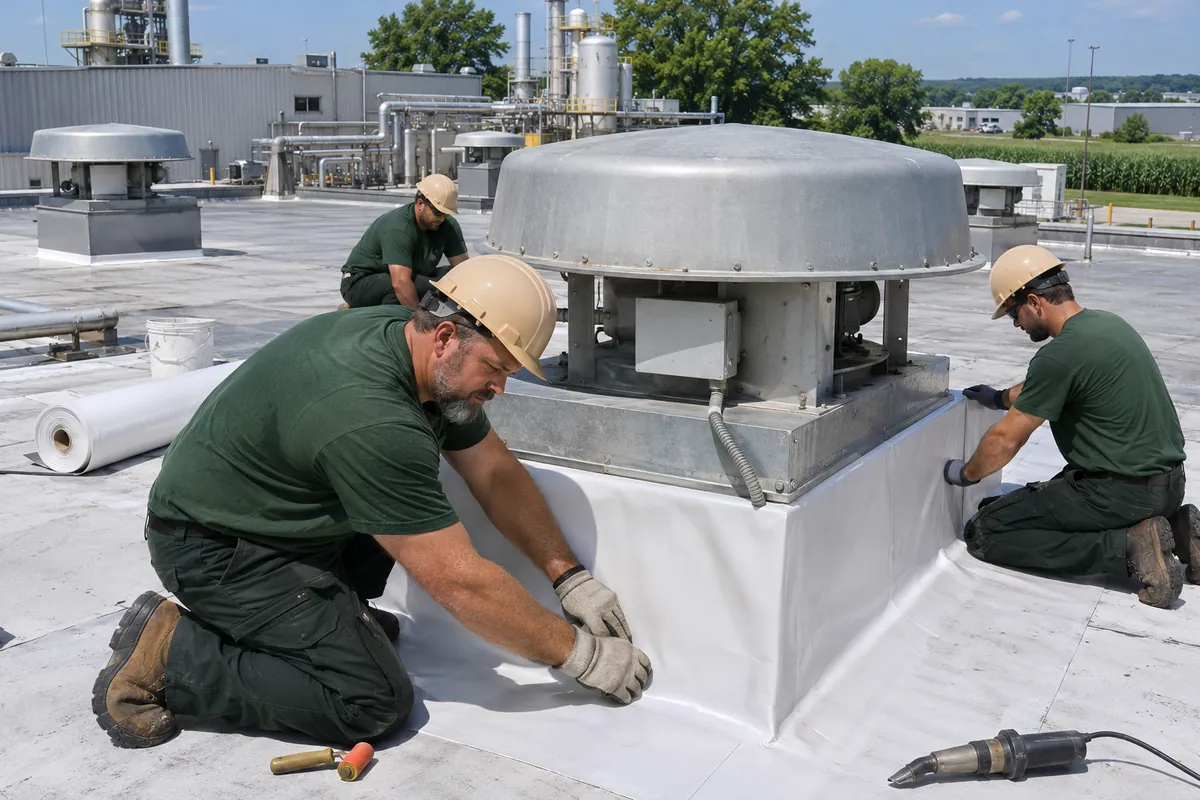
Plants with exhaust that carries oil or grease need a membrane and detailing chosen for it. Industrial roofing covers those roofs.
Evansville industrial roofing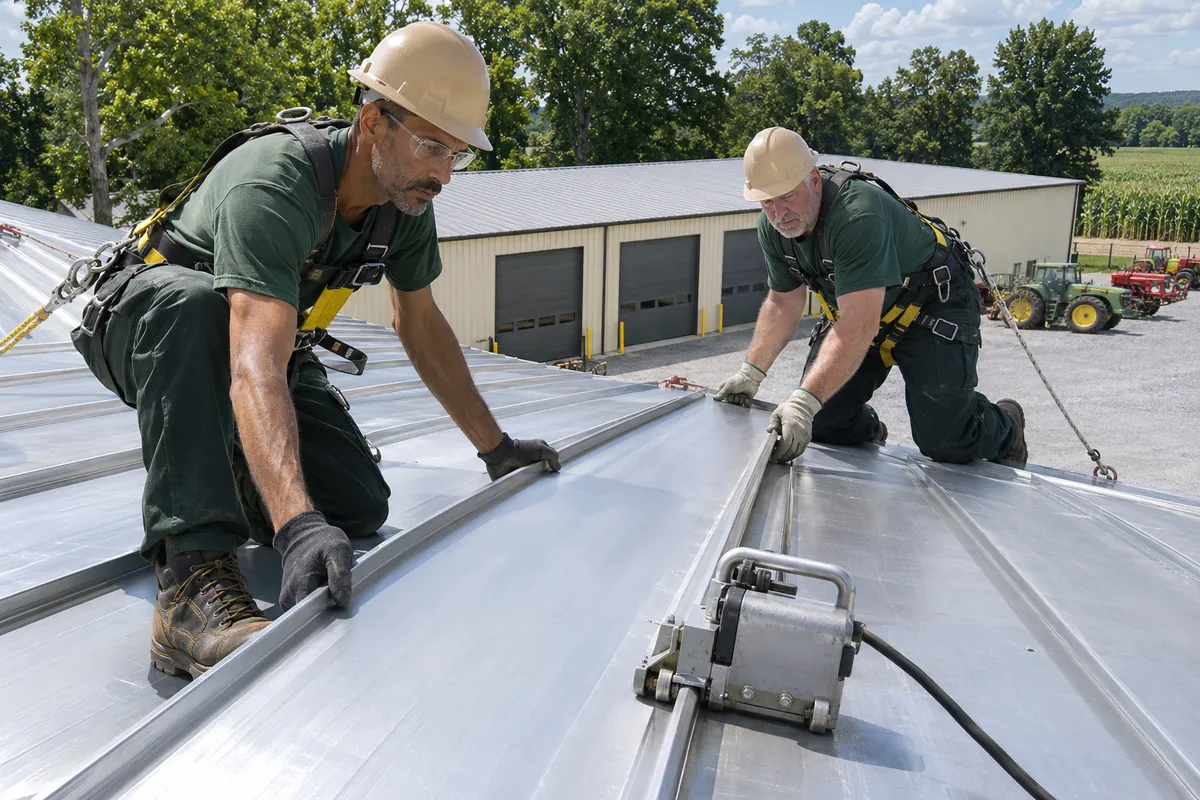
Where a flat roof keeps ponding, retrofit framing and metal panels add slope and end the cycle of patching low spots.
Evansville commercial metal roofingRubber roof answers for owners of older buildings.
It is a black synthetic rubber sheet made for low-slope roofs. The sheets are wide, so an office roof ends up with only a few taped laps, and the rubber flexes through January cold and July heat. Offices, schools, and older flat-roof buildings are where it shows up most.
The old tape or adhesive is cleaned out, the lap is primed, and new seam tape or a cover strip goes over the joint. Loose laps get re-adhered first. Repairs take best on a dry, clean surface, and we check the laps next to the failed one, since they usually aged the same way.
Old membrane and wet insulation come off, damaged deck gets replaced, and new insulation and cover board go down. Then new EPDM is laid with taped seams and fresh flashing at walls, curbs, and drains. The roof is done in sections, each sealed by evening, so the building stays open and dry.
Thickness, the attachment method, roof size, how much comes off, insulation, deck repairs, and the count of pipes and curbs all move the price. Access and work hours around a busy building add to it. A roof walk with cores turns those into a written number for your roof.
It depends on what cores show. A dry, well-attached rubber roof can sometimes take a new layer over a cover board, within code limits on layers. Ballasted roofs, wet insulation, or a second existing layer mean tear-off. We write up which applies and why.
Send the address and a note on the walls, drains, or seams that worry you. We walk the roof and price the EPDM work in writing.
Or call (812) 682-5831