
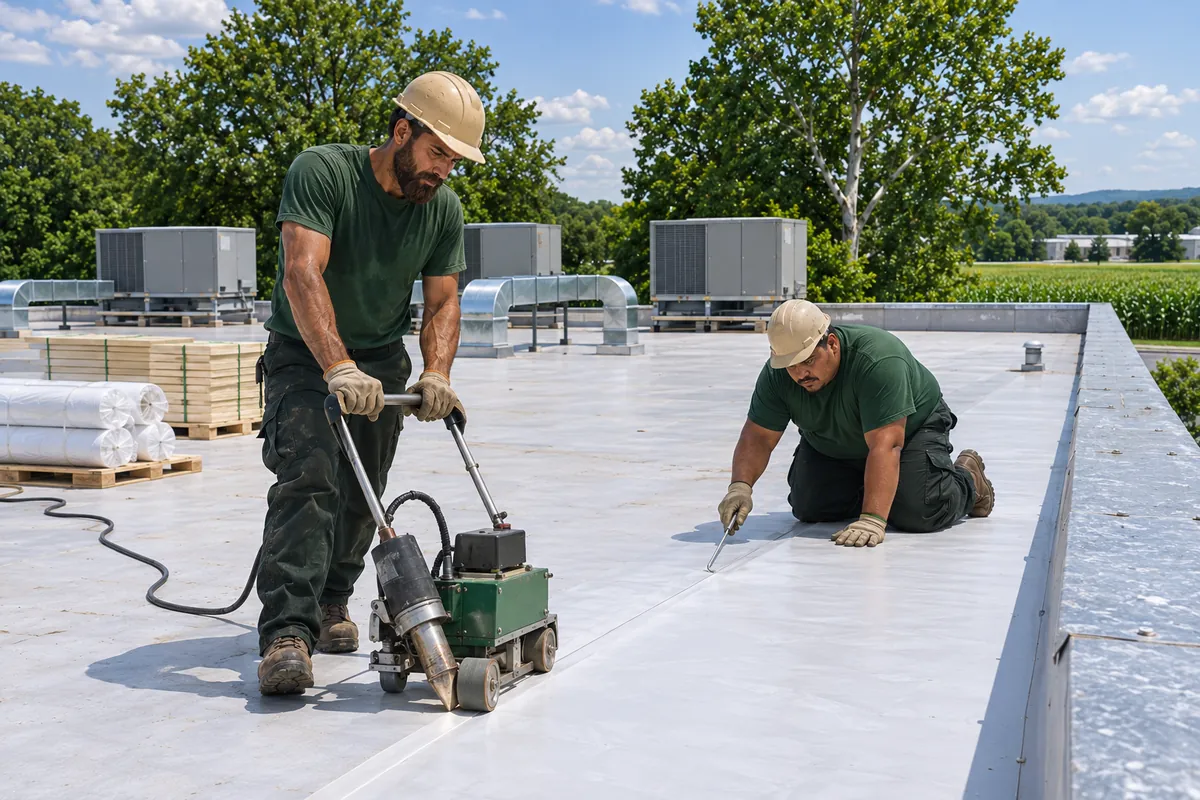
TPO Roofing
White, heat-welded single-ply over new insulation. A strong fit for stores, offices, and cooled plants with low-slope decks and steady foot traffic around rooftop units.
Evansville TPO roofing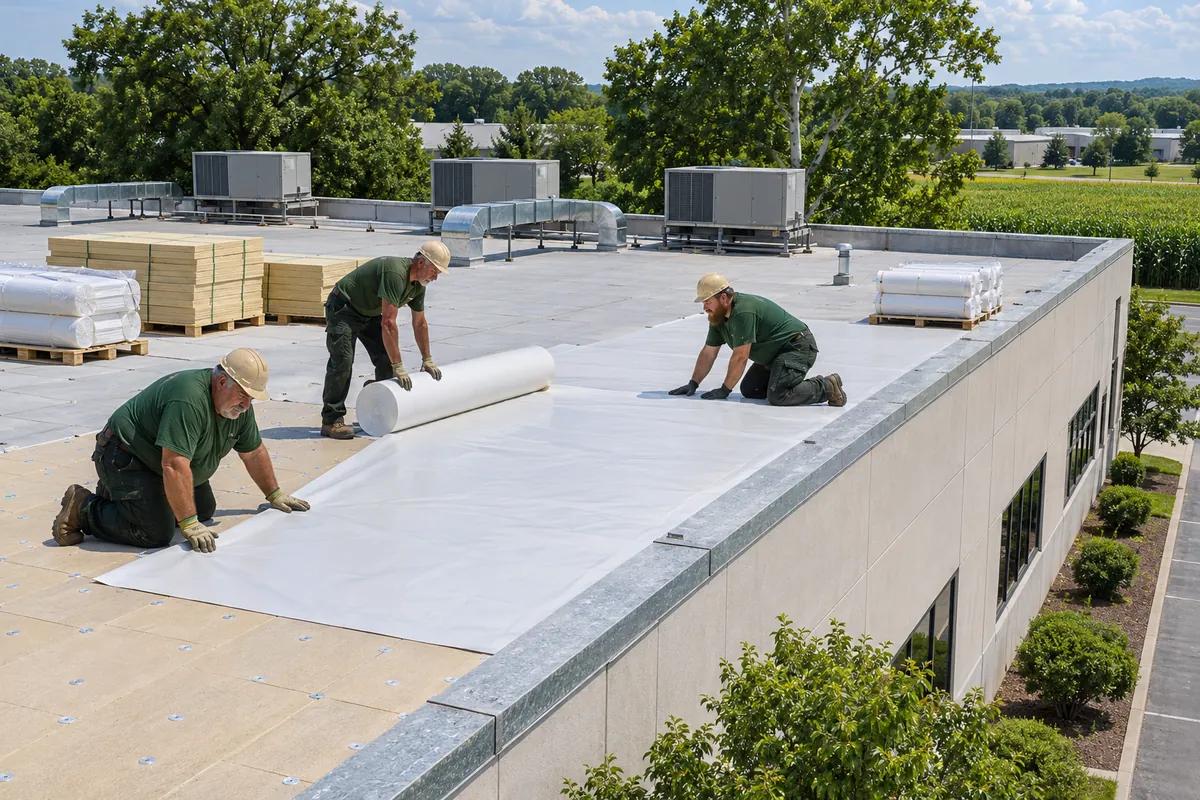
We provide commercial roofing services in Evansville and five nearby towns: TPO, EPDM, industrial, and metal roofs, plus full tear-off and replacement.
Each of our commercial roofing services in Evansville fits a different roof. Start with the one that matches your deck and drainage.
White, heat-welded single-ply over new insulation. A strong fit for stores, offices, and cooled plants with low-slope decks and steady foot traffic around rooftop units.
Evansville TPO roofing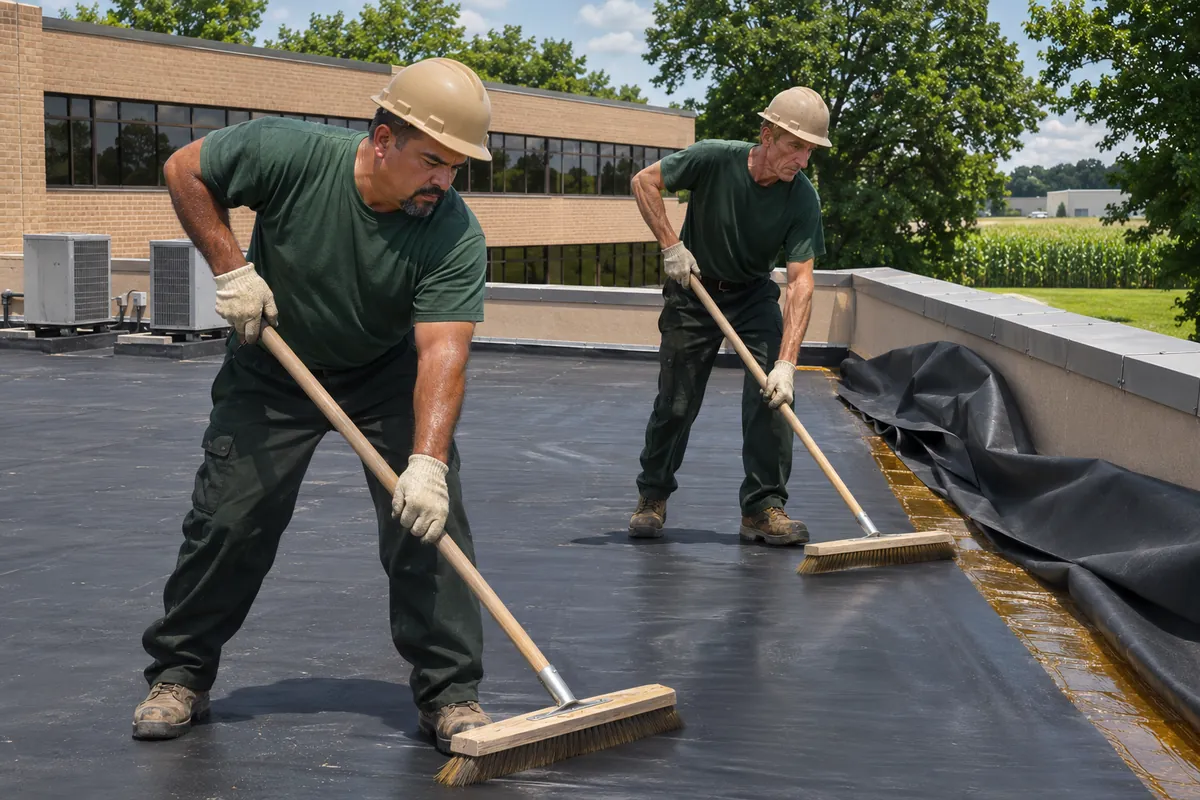
Black rubber membrane in wide sheets with taped seams. It rides out cold-weather movement and suits older flat roofs, schools, and offices with few penetrations.
Evansville EPDM roofing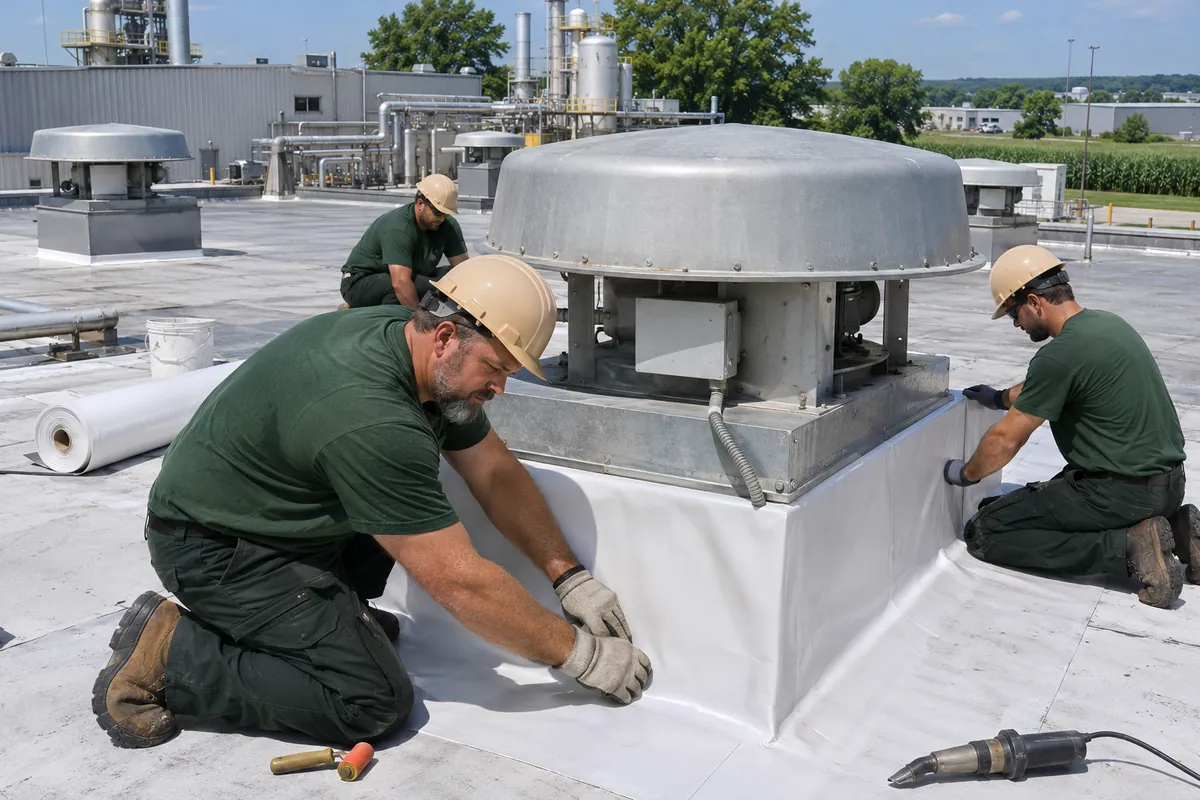
Membrane or metal systems detailed for exhaust, duct runs, heavy curbs, and process heat, installed in sections planned around production and plant safety rules.
Evansville industrial roofing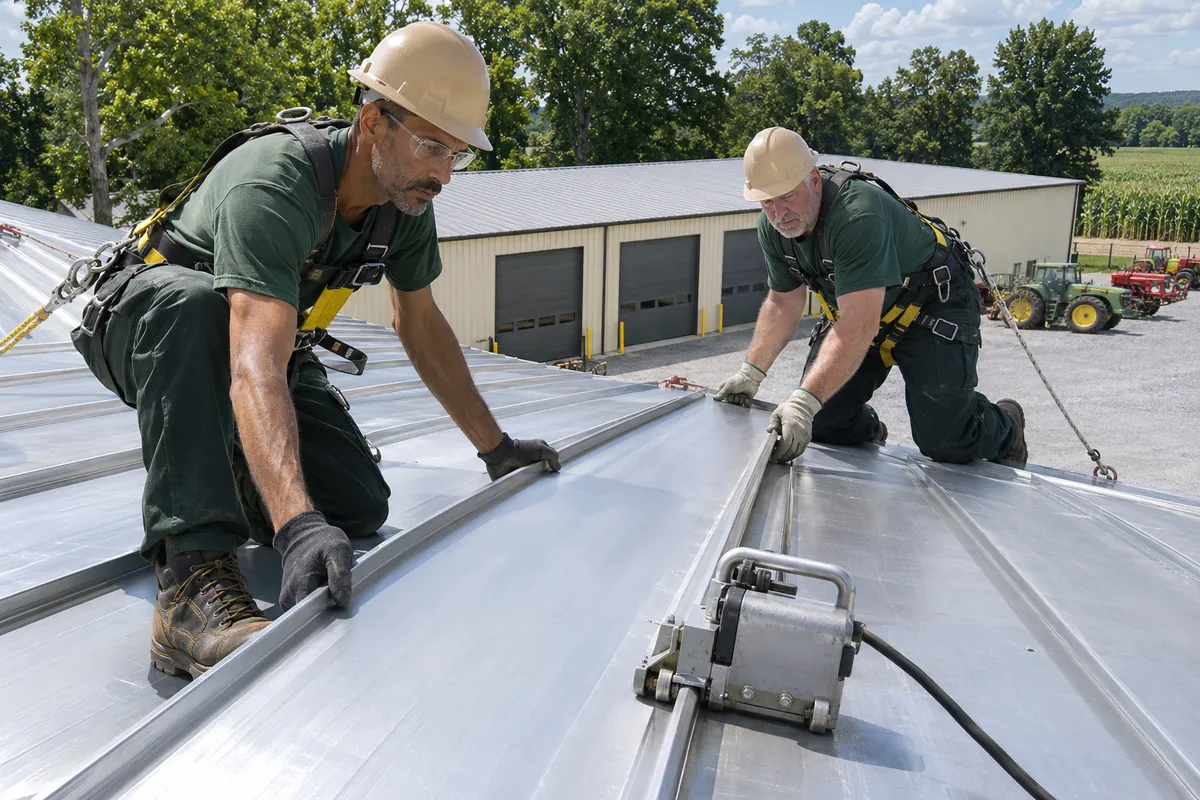
Standing-seam or exposed-fastener steel panels for metal buildings, and retrofit framing that turns a ponding flat roof into a sloped metal one.
Evansville commercial metal roofingReplacement means tearing the roof down to the deck and building it back. These signs separate a roof worth repairing from one that has reached the end.
Send the roof size and the deck type if you know them. We bring core samples back and lay out the system that fits, in writing.
A quick comparison of where each system belongs and what to watch for once it is on. Core samples and a look at the deck from inside confirm the row that fits your building.
| System | Best Deck And Slope | Seam Or Attachment | Common Buildings | Watch For |
|---|---|---|---|---|
| TPO Roofing | Low slope over steel or concrete decks | Hot-air welded laps | Stores, offices, cooled plants | Probe every lap at install |
| EPDM Roofing | Low slope, older flat decks | Seam tape over primer | Schools, offices, churches | Black surface runs hot in July |
| Industrial Roofing | Large low-slope or metal plant roofs | Welded or taped, plus walkway pads | Plants, warehouses, river terminals | Exhaust residue and process heat |
| Commercial Metal Roofing | Sloped steel buildings or retrofit framing | Standing-seam clips or exposed screws | Metal shops, storage, farm buildings | Fastener and end-lap upkeep |
| Commercial Roof Replacement | Any roof failing across the field | New system chosen for the deck | Buildings with wet insulation or two layers | Deck repairs found after tear-off |
The same four stages sit behind every system on this list, from a small office roof to a plant with dozens of units.
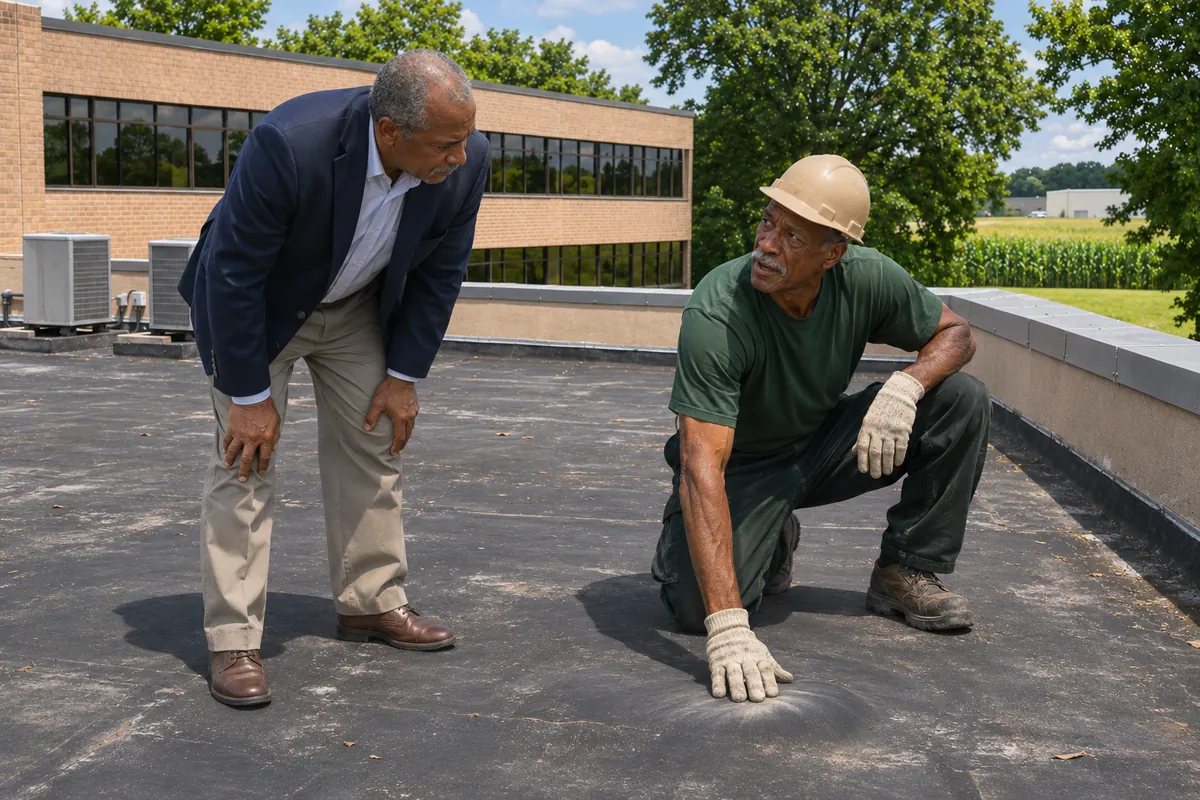
A roofer walks each section with a moisture meter, cuts cores at suspect spots, and photographs drains, curbs, and edges for your file.
Core results, deck type, and how the building is used point to TPO, EPDM, metal, or a full replacement. You get the reasons in writing.
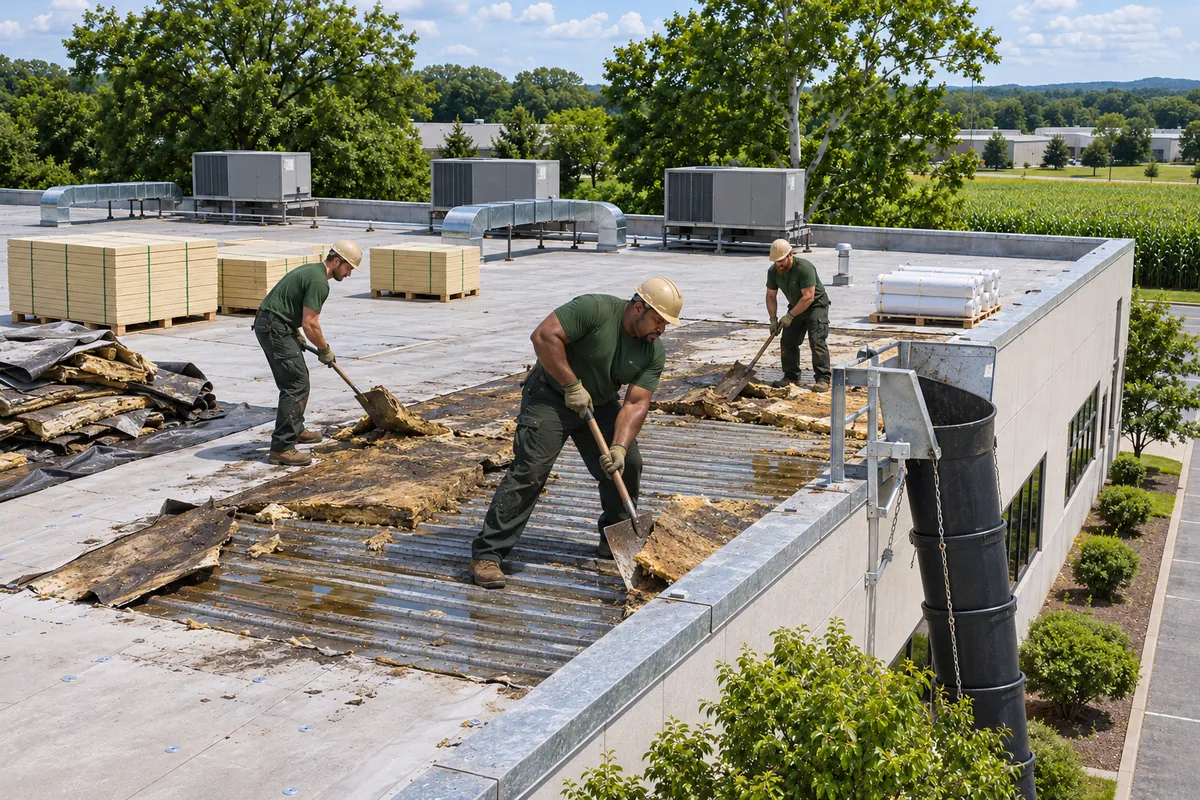
Crews tear off only what they can close before quitting time, then set insulation and membrane and flash every curb and drain in that area.
Final seam probes, a cleanup of the grounds, and a walkthrough with you finish the job. Product and layout details go into your roof file.
Answers on choosing a system, replacing a roof, and timing the work.
Start with the deck, the slope, and what happens under the roof. Cooled stores and offices on low-slope steel decks lean toward TPO, older flat roofs with few penetrations toward EPDM, plants with exhaust toward industrial detailing, and sloped steel buildings toward metal panels. Core samples confirm the choice before any price is written.
A re-cover skips most tear-off and disposal, so it usually costs less up front. It only makes sense when cores show dry insulation, the deck is solid, and code allows another layer. A re-cover over wet boards traps the water and shortens the life of the new roof, which erases the difference.
Yes. Plenty of buildings pair a low-slope membrane over the main floor with a metal roof on a warehouse addition. Where the two meet, the transition flashing is the detail that matters most, so we draw it on the scope and build it with the same care as the field of each roof.
Replacement makes sense once wet insulation shows up in core after core, seams fail faster than they can be patched, or the membrane turns brittle. A single leaking curb or drain is a repair. A roof walk with moisture readings tells the two apart, and we put the findings in writing either way.
Usually, yes. The roof is split into daily sections, each torn off, rebuilt, and sealed before the crew leaves. Noisy or odorous work goes to hours you choose, and protection goes under active areas. Deliveries and fire lanes stay open on a plan we set with your staff before day one.
Size, weather, and how many sections must fit around open hours decide it. A small retail roof can wrap up in days, while a large plant roof runs for weeks in phased sections. The written scope includes a working schedule by area so you can plan the building around it.
Spring through fall is the main season, since adhesives, primers, and seam tape need mild, dry weather. Welded TPO and metal panels can go on in cooler months on dry days. Planning a winter or summer job means checking product temperature limits and setting daily start times around them.
Tell us the building and what the roof is doing. We start with a roof walk and core samples, then write up the system that fits.
Or call (812) 682-5831