
Cold Welds At Factory Laps
Seams welded too cool look closed but peel apart under a probe. Water wicks into the lap and then the insulation, often along a straight line you can trace.
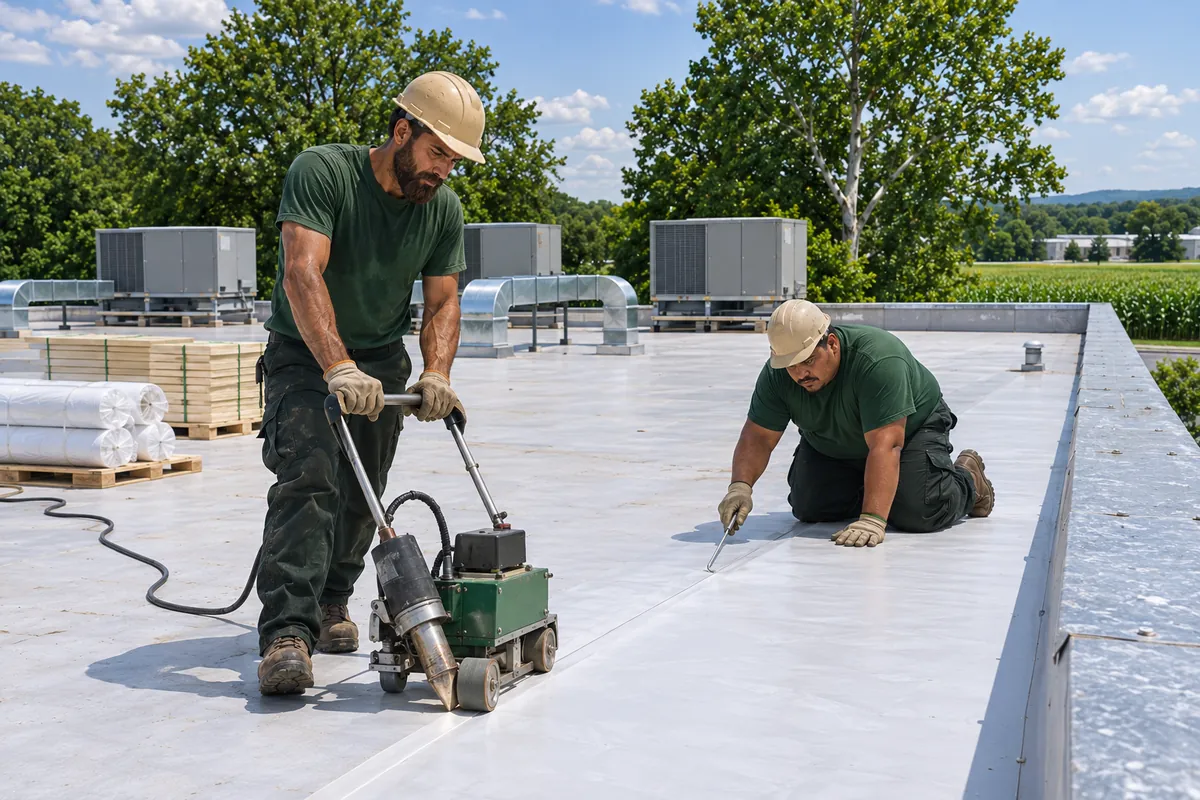
As an Evansville TPO roofing contractor, we install white, heat-welded TPO membrane on low-slope roofs over stores, offices, plants, and warehouses.
Evansville TPO roofing fits most low-slope commercial decks. These lists show where it goes straight on and where other work comes first.
These are the TPO conditions we find when an older white roof starts leaking.
Seams welded too cool look closed but peel apart under a probe. Water wicks into the lap and then the insulation, often along a straight line you can trace.
Inside and outside corners at rooftop units carry the most stress. Corners stretched thin at install crack first, and the leak shows inside near the duct drop.
Ponding leaves a gray ring as each puddle dries. Standing water weakens welds over time and points to crushed insulation, a sagging deck, or a drain set too high.
Plates that tent the membrane mean the roof flexes in wind or the insulation has compressed. Each tented plate can wear a hole from underneath.
Aged TPO turns chalky and shows fine surface cracks. Once the top ply crazes, new welds stop holding to it, which moves the roof from repair toward replacement.
Perimeter metal that lifts in wind pulls the membrane edge with it. Big blow-offs start at a loose edge, so every termination bar and coping joint gets checked.
The choices below set the price and the performance of a TPO roof.
| Option | Choices | What Decides It |
|---|---|---|
| Membrane thickness | 45, 60, or 80 mil | Foot traffic, expected service, and budget |
| Attachment | Mechanically fastened or fully adhered | Deck type, wind exposure, and fastener noise inside |
| Insulation | Polyiso layers under a cover board | Energy code for the building and the drain layout |
| Over an existing roof | Re-cover where cores show dry boards | Moisture readings, layer count, and code limits |
| Color | White, with tan or gray on request | Cooling load and how the roof looks from taller neighbors |
Plastics plants, stores, and offices all gain from the same few TPO traits.
Hot air fuses the sheets into one piece at every lap. A welded seam has no adhesive to dry out, and a probe test shows right away whether it took.
White TPO reflects much of the sun that black roofs absorb. Rooftop units on plants and stores run against a cooler surface through July and August.
Pre-formed corners, pipe boots, and curb wraps weld to the field sheet. Busy roofs with many units get flashing that is part of the same membrane.
Newer TPO accepts welded patches. A service cut or a dropped tool can be fixed with matching membrane years later, without adhesives.
Tell us which seam or curb sits above the wet spot inside. A probe check there shows whether a repair holds or the field needs replacing.
Four stages, each closed out before the next starts.
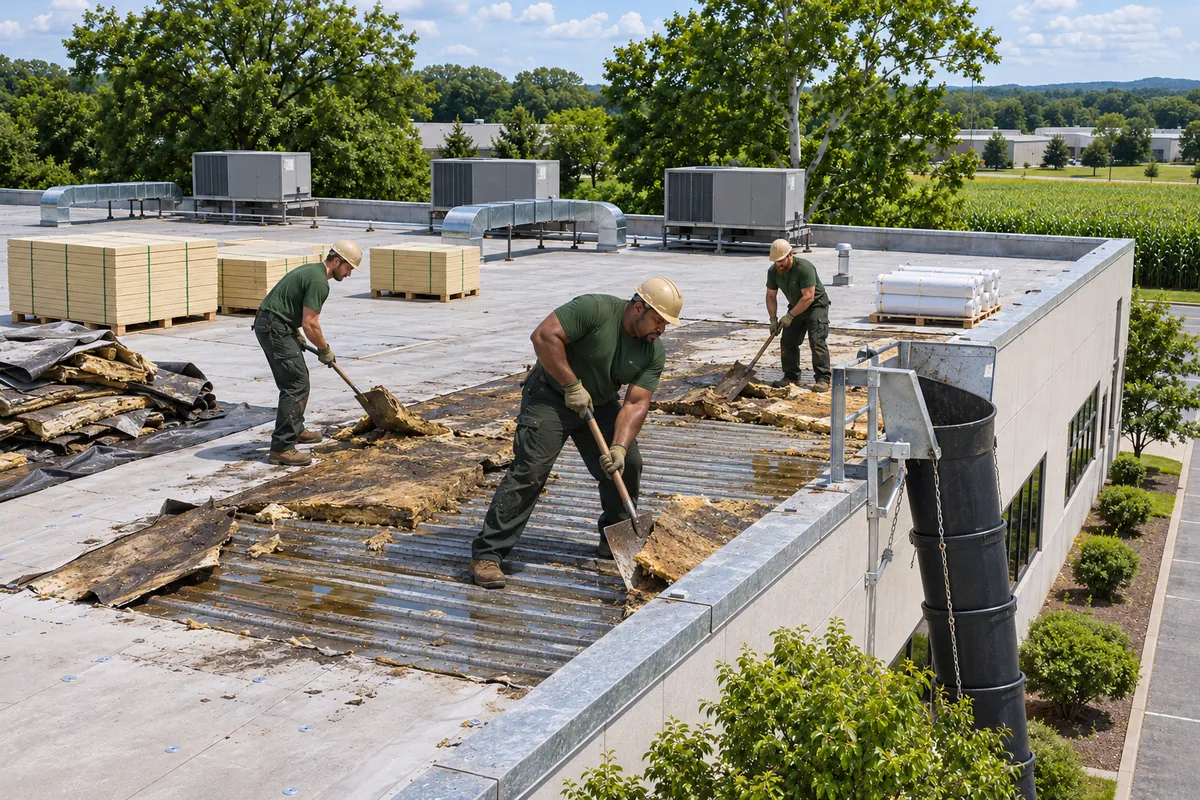
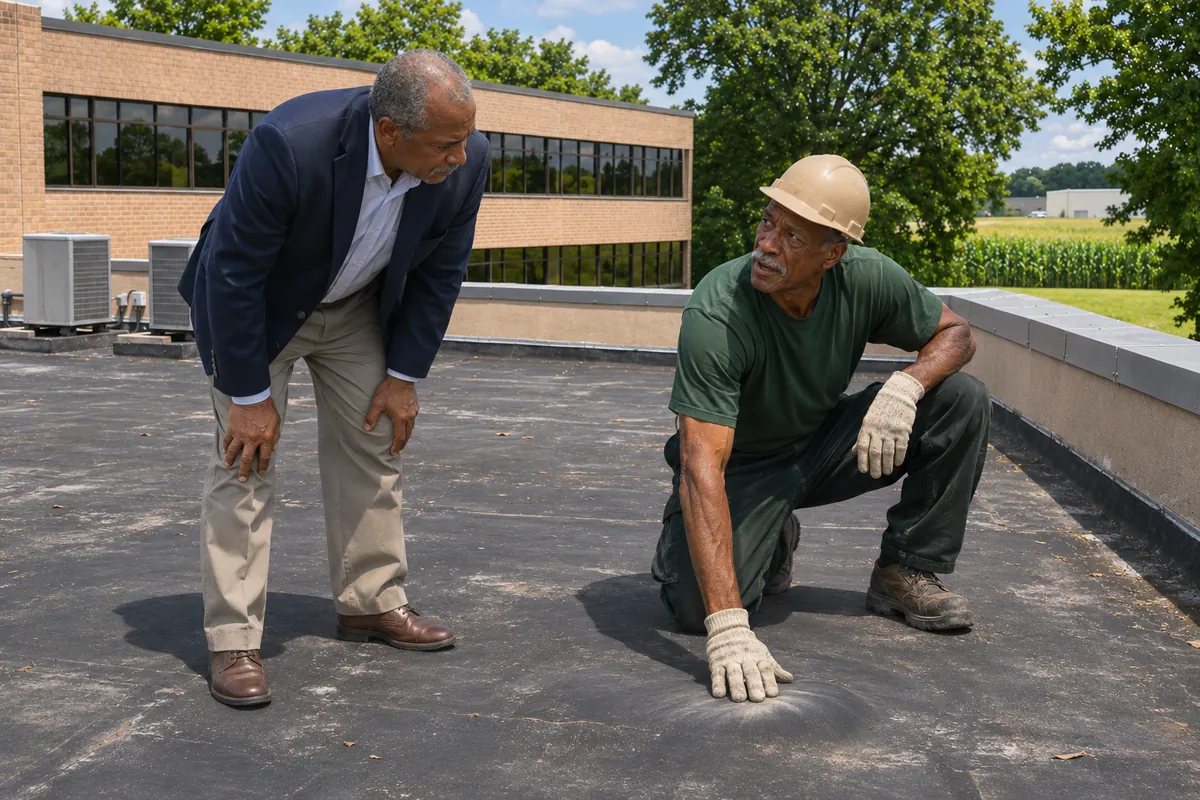
Cores at the field, curbs, and drains show whether the old insulation stays or goes. Wet areas get marked on a roof plan you keep.
Polyiso goes down in staggered layers, with tapered boards built toward drains where water used to sit, then a cover board on top.
Each morning starts with a test weld for the day's heat and humidity. Every lap is welded, then probed along its length before roofers move on.
Curb wraps, pipe boots, and edge metal finish each section, and the section is closed before quitting time so the building stays dry overnight.
When TPO is the wrong match, one of these usually fits.
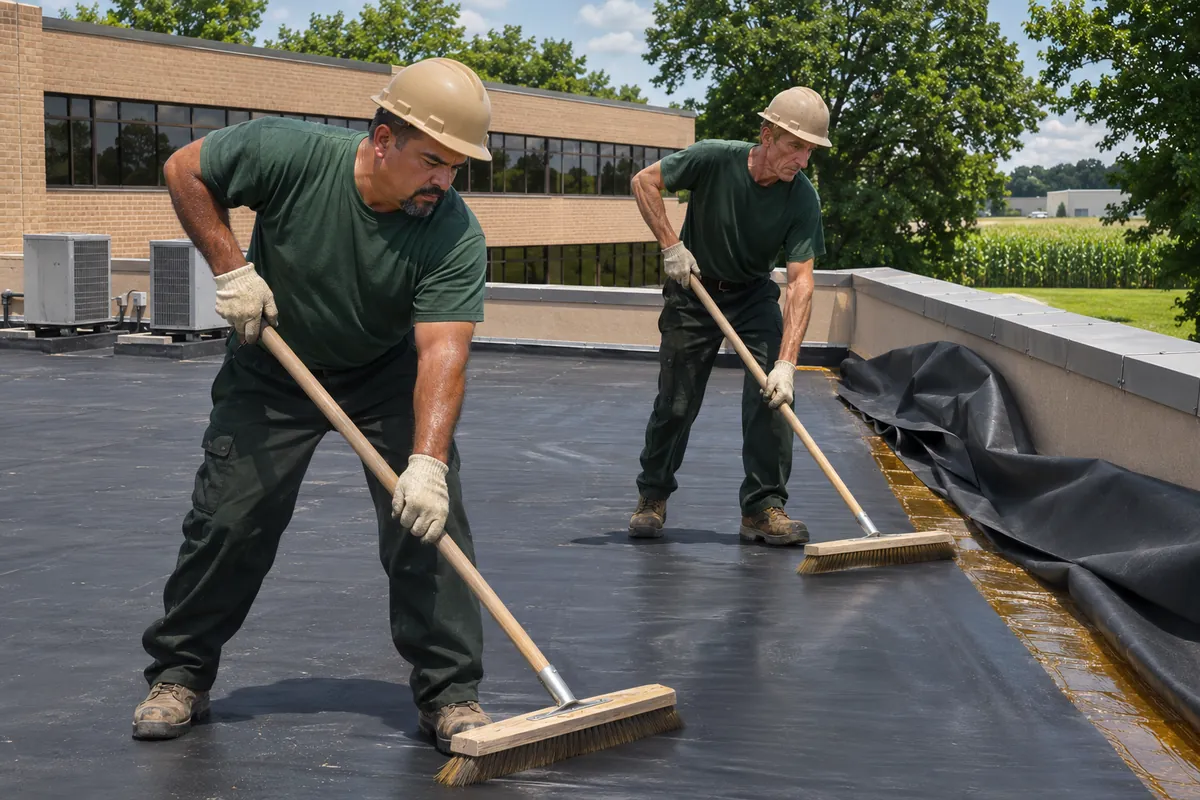
Rubber membrane suits older flat roofs where a TPO weld would sit on brittle, aged sheets, or where an owner wants simple taped patches later.
Evansville EPDM roofing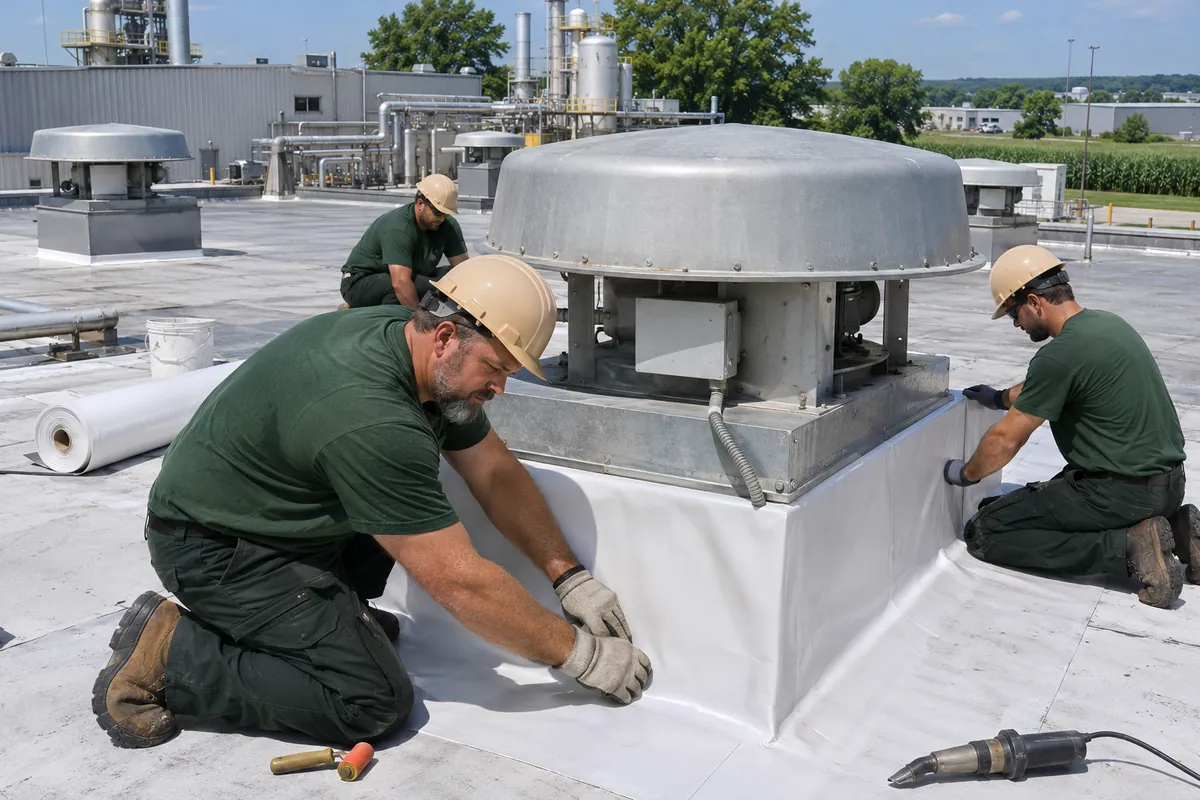
Plant roofs with heavy exhaust or process heat need more than a standard TPO detail. Industrial roofing plans walkways, curbs, and phasing.
Evansville industrial roofing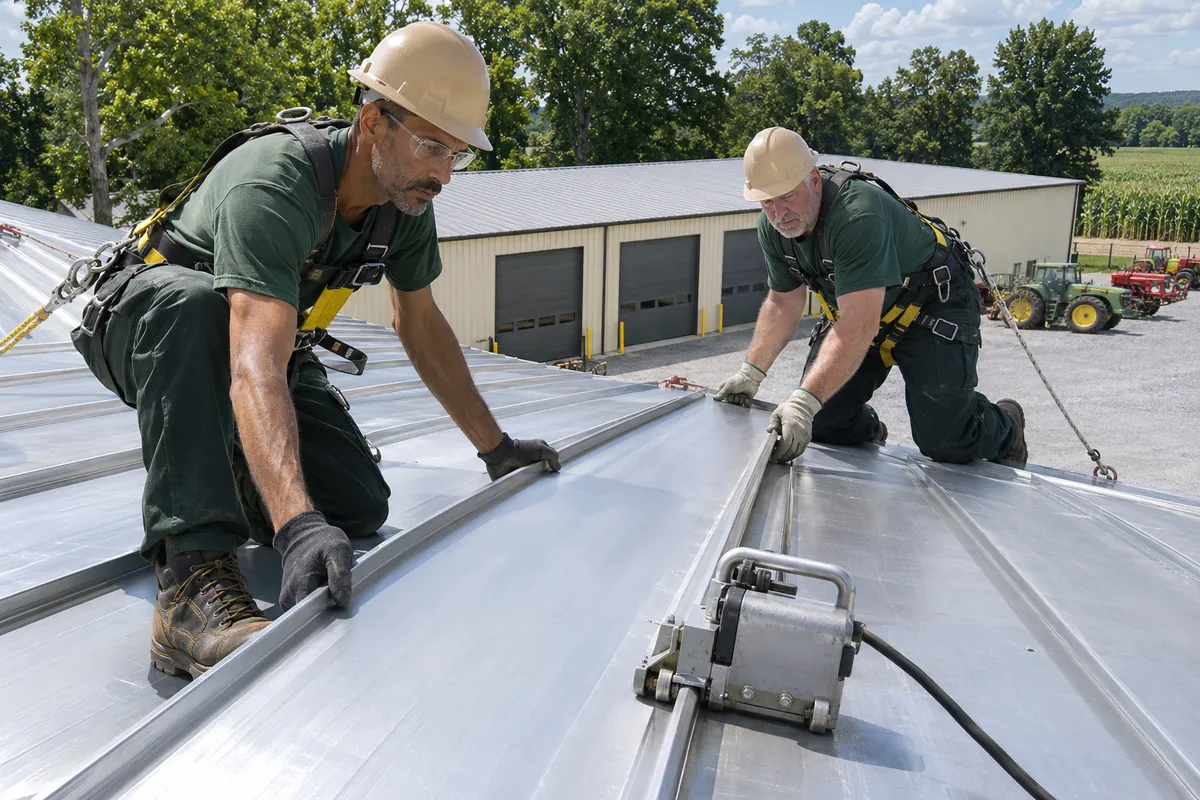
A flat roof that never drained right can become sloped metal panels on retrofit framing, moving water off by slope instead of drains.
Evansville commercial metal roofingWhat owners ask about TPO before they approve a scope.
It is a single-ply thermoplastic sheet, white in most cases, laid over insulation on a low-slope deck with its laps fused by hot air. On a plastics plant the sheet is fastened or adhered, flashed around exhaust and process units, and its white face keeps the work floor below cooler in summer.
An automatic hot-air welder rides the lap and melts the two sheets into one. Heat and speed get set each morning from a test weld, since humidity changes how the membrane takes heat. Then every seam is probed by hand, and any soft spot is rewelded before the area is closed.
Square footage, the membrane thickness, how much insulation goes under it, and whether old layers come off set most of the number. Deck repairs, drain count, and curbs add to it, and adhered systems take more labor than fastened ones. A measured roof walk turns those into a price for your warehouse.
Often it can. If cores show the old roof is dry and well attached, and code allows another layer, we cut out any wet patches, add a cover board, and fasten TPO over it. A soaked roof, or one that already has two layers, gets torn off first.
Welding works in cold weather because the seam is fused by heat, with no adhesive cure. Dry decks and daylight are the limits. Adhered systems wait for warmer days, so winter TPO jobs lean toward fastened membrane, with test welds run more often as temperatures change.
Send the address and the roof size if you have it. We walk the roof, cut cores, and price a TPO system in writing.
Or call (812) 682-5831