
Leaks Over Running Lines
Water that drips onto a line or into stock costs more than the roof repair. Most of these leaks start at a cracked curb corner overhead.
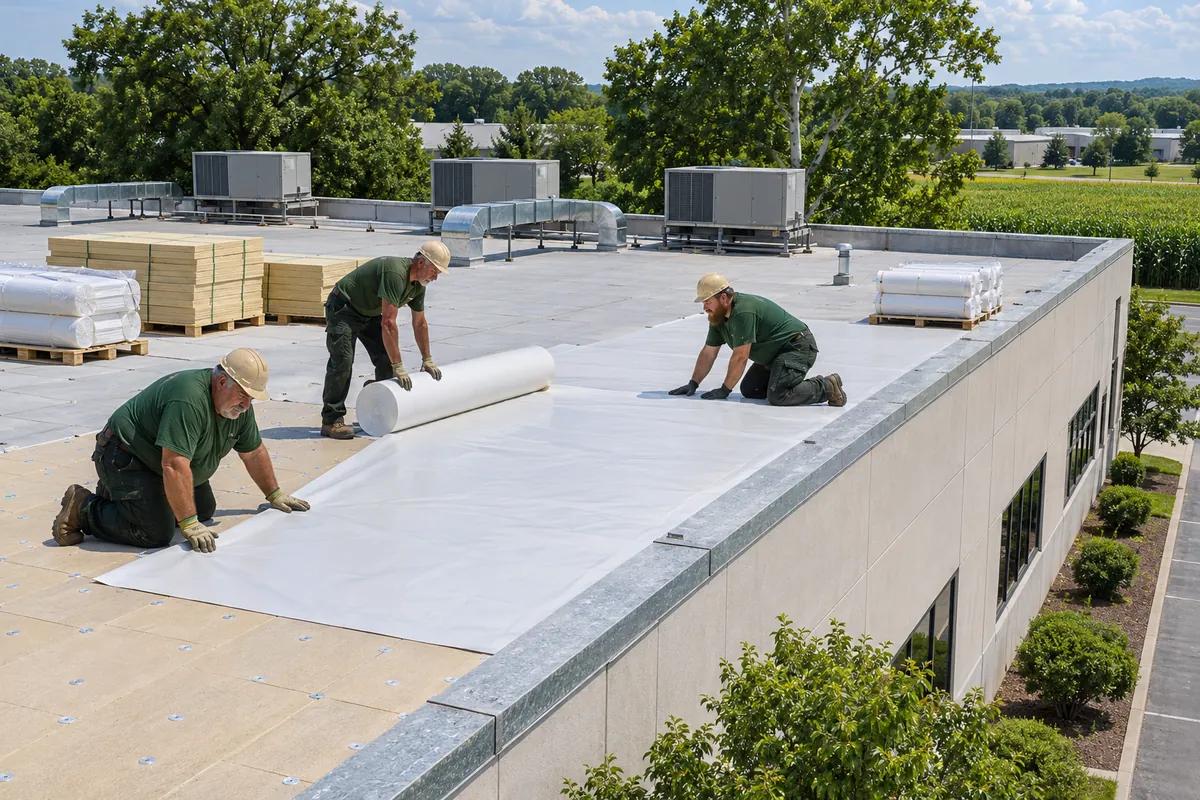
As a Princeton commercial roofing contractor, we install and replace roofs on Gibson County plants, warehouses, and metal buildings while production keeps going.
Princeton commercial roofing on a working plant runs on the plant's schedule, with each roof section opened and closed within one shift.
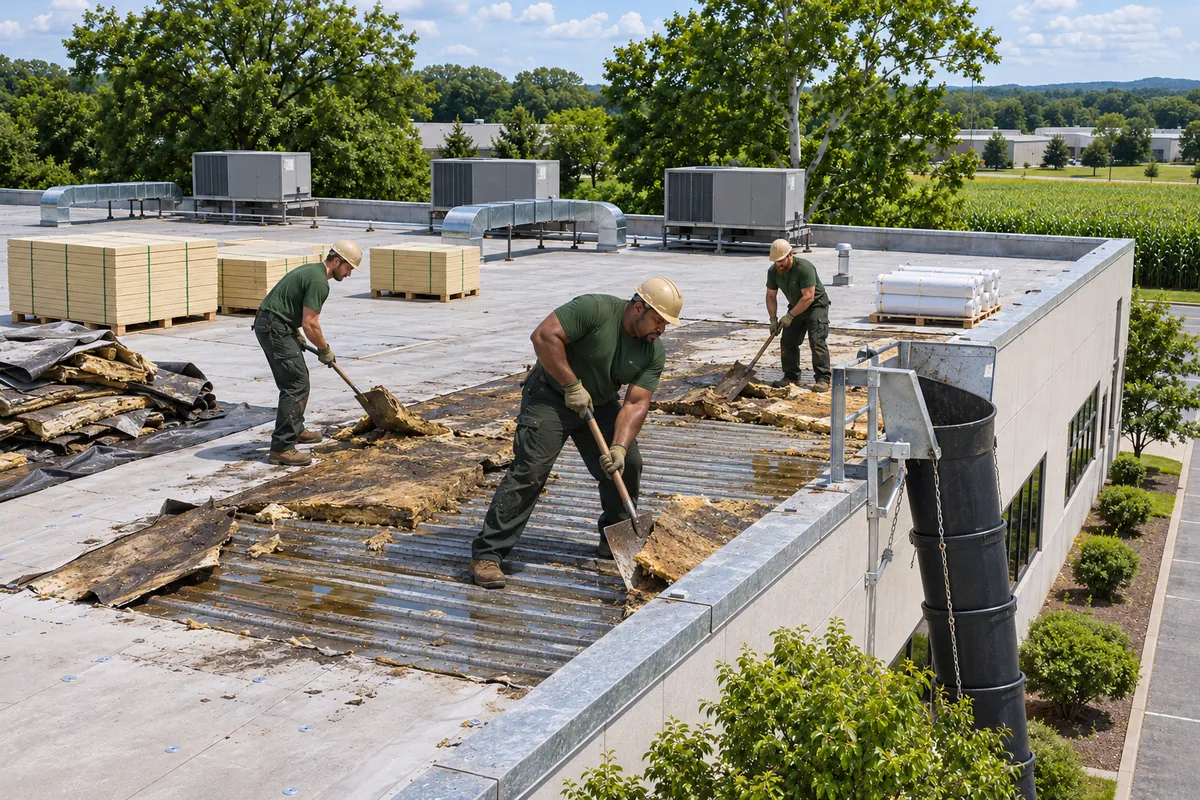
Before any tear-off, we sit down with your plant manager and maintenance lead to mark which areas run which lines, when shifts change, and which units can go down and when.
From that plan, the roof is split into sections small enough to tear off, rebuild, and seal in one shift. Loud and odorous work moves to the hours the plant picks. Areas over finished goods or sensitive equipment get covers below before their section opens, and the tie-in to the old roof is sealed at the end of every shift.
Plant roofs in Gibson County fail first around the equipment and the docks, long before the open field wears out.
Water that drips onto a line or into stock costs more than the roof repair. Most of these leaks start at a cracked curb corner overhead.
Residue around exhaust fans softens and blisters the membrane. The damaged ring keeps growing until the fan curb leaks.
Roof sections above loading docks settle and hold water against the wall. Wet board spreads inward from there.
Old roof penetrations left after a line moved are capped with sheet metal and sealant, which fails within a few seasons.
Steel roofs over storage wings rust at fasteners and laps, and leaks show as drips on pallets below.
Techs reaching units wear a line through the roof surface. Punctures along it stay hidden until a rain finds them.
Gains a plant manager notices on the floor.
Shift-sized sections and planned shutdowns keep production going while the roof is replaced overhead.
New curbs and closed penetrations end the leaks over lines and pallets, along with the tarps rigged under them.
Walkway pads to each unit protect the roof and give service techs a clear route across it.
The closeout plan shows every unit, drain, and penetration, so new equipment gets placed with the roof in mind.
The systems that cover Gibson County industrial roofs.
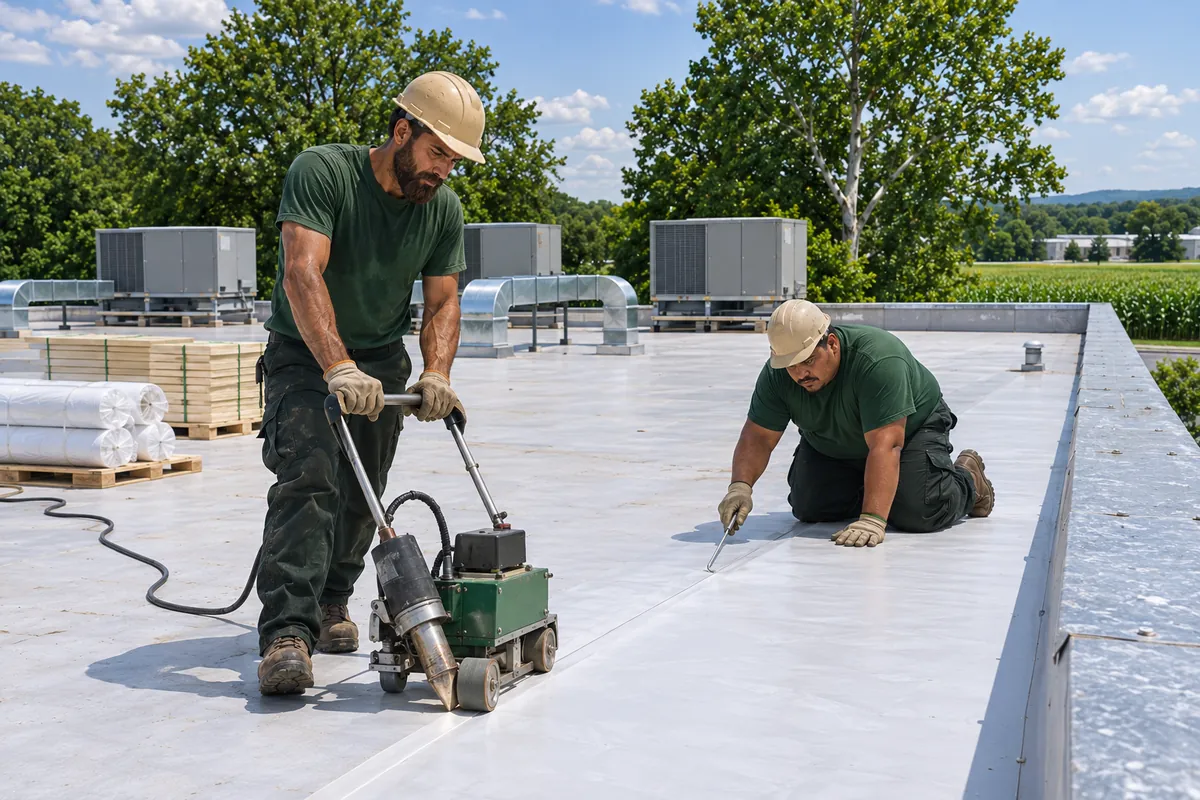
Welded TPO covers the main plant field over cooled work areas, with walkway pads welded to the sheet along service paths.
Evansville TPO roofing
Rubber membrane fits office wings and older flat sections of a Princeton plant where the deck is light.
Evansville EPDM roofing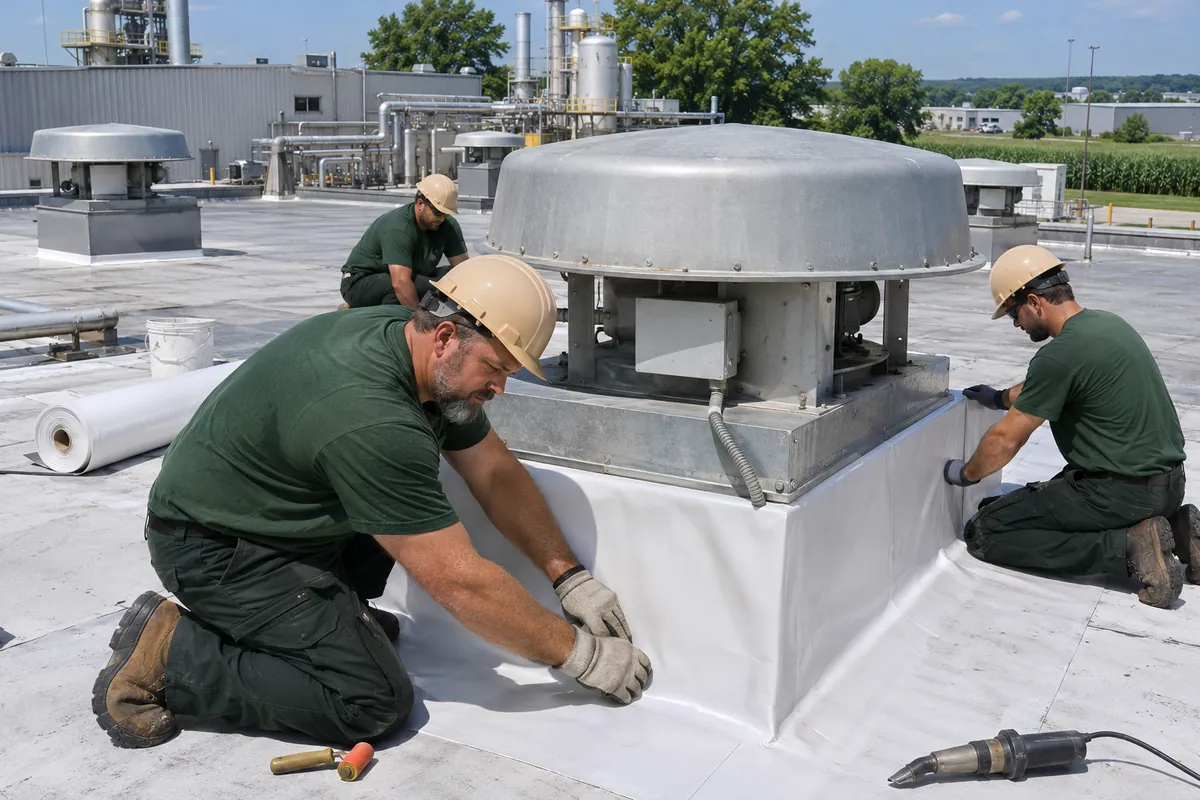
The industrial scope ties it together: exhaust areas, curbs, penetrations, and the phasing plan for production.
Evansville industrial roofing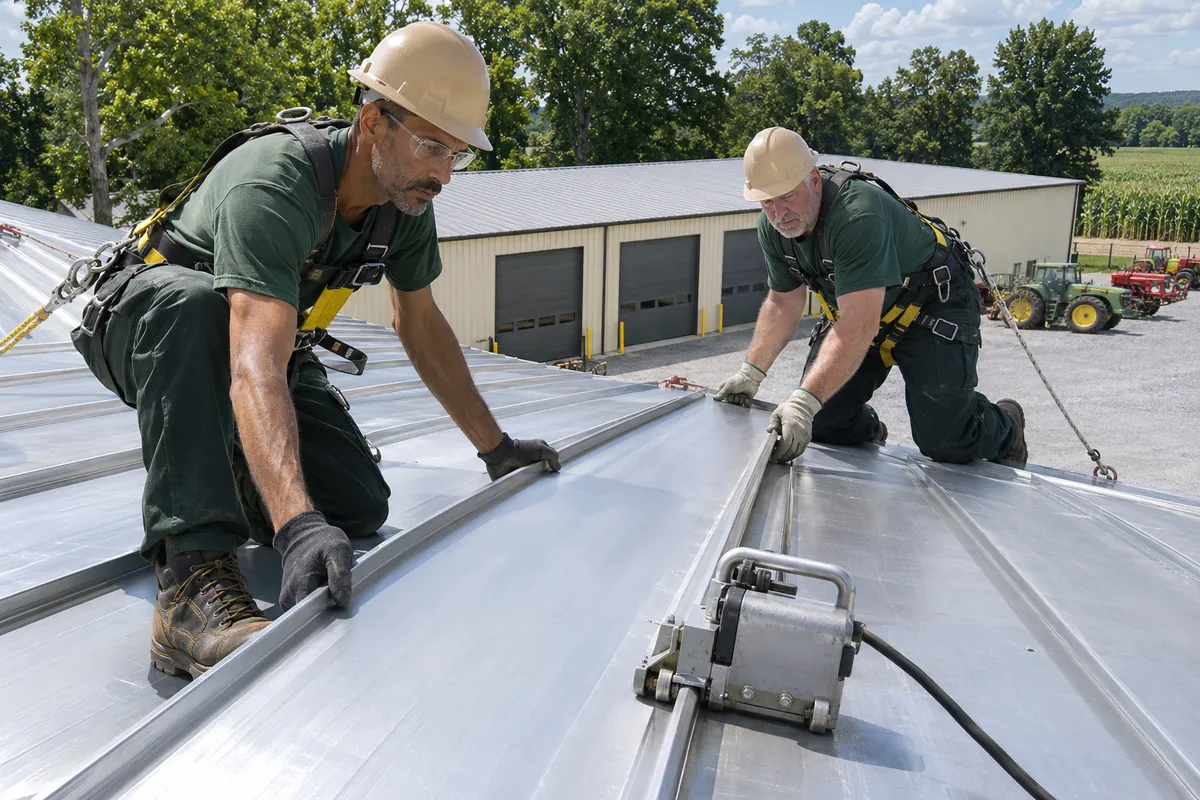
Standing-seam or exposed-fastener panels re-cover warehouse and storage wings without touching production areas.
Evansville commercial metal roofingSend us the shift schedule and the roof areas over each line. We build the phasing plan before anything else.
Four steps, all set by the plant calendar.

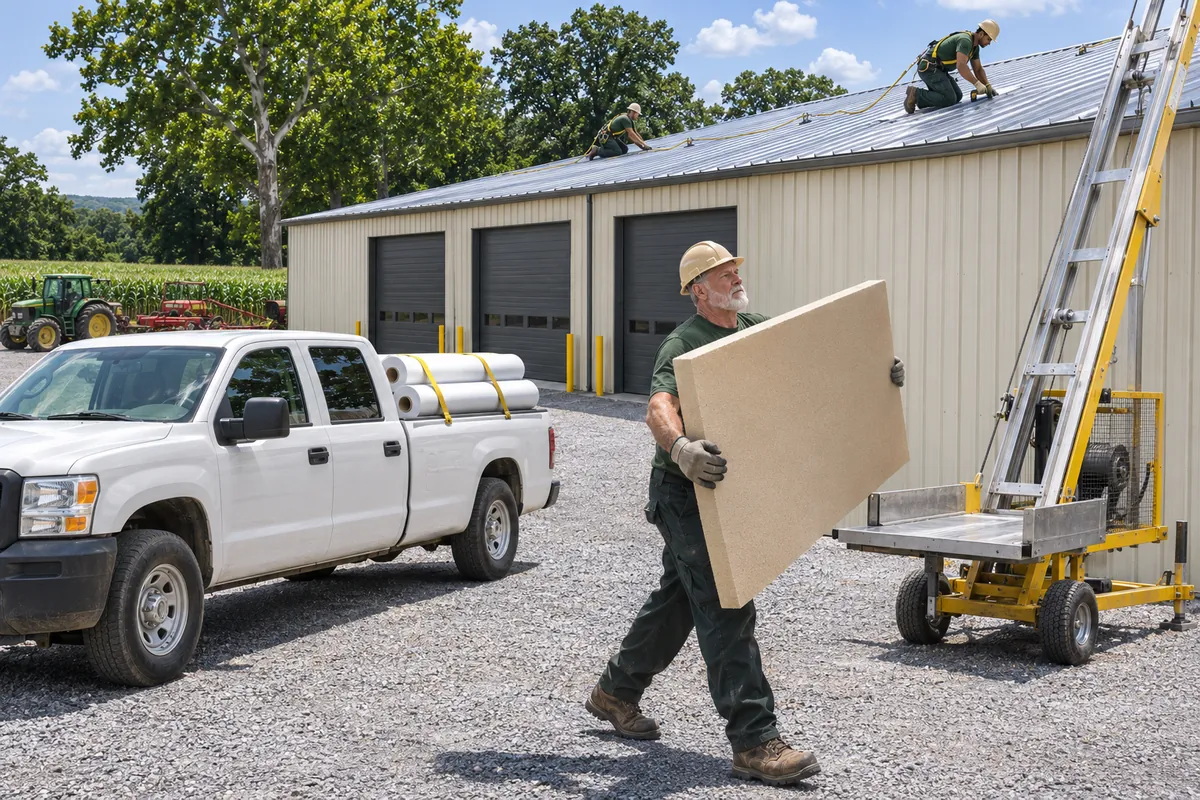
We walk the roof with maintenance, core the field, and log every unit, stack, and penetration on a plan.
Roof sections are sized to one shift and ordered so the lines under them can be protected or scheduled around.
Old roof comes off, new board and membrane go down, and the section is sealed before the shift ends.
Each unit is shut down only for its flashing. Walkway pads go in last along the service paths.
The same phasing approach applies to plants and shops in these towns. Elsewhere? Call us or send us a message.
Plant and warehouse questions from Gibson County.
Yes. Plants, warehouses, and metal buildings in Princeton are all part of the work, both new roofs and replacements. Jobs are phased around shifts, and every rooftop unit is flashed into the new system. Call to go over your roof and the schedule your plant runs on.
A small warehouse gets the same roof walk, cores, and written scope as a large plant. On a smaller roof the job can often be finished in a few sections, with the lift and debris kept clear of truck traffic.
Ask for a written safety plan, a phasing plan tied to your shifts, and a scope that lists how each unit, stack, and penetration will be flashed. Ask who your maintenance lead will talk to each day. Those answers matter as much as the price.
Roof size and height, the system, insulation, deck condition, the number of units and penetrations, and how tightly work must fit around shifts set the price. Crane time adds on taller buildings. A walk with cores gives you a written number broken out by section.
Each section is sealed before roofers leave, so overnight rain finds a closed roof. When rain is forecast during the day, only what can be closed quickly gets opened, and temporary seals go on at the tie-in to the old roof. Lines below stay protected throughout.
Yes. Sensitive areas get extra interior protection, work timed to plant downtime, and low-odor products where the scope allows. Those areas are marked on the roof plan so every roofer knows where tighter rules apply.
It can, where the plant prefers it and the weather allows. Night work needs lighting and a safety plan for roof edges, and adhered membranes need temperatures within product limits. We note any off-hours work and its cost in the scope.
Send the plant address and your shift schedule. We walk the roof and draw the phasing plan.
Or call (812) 682-5831