
Residue Around Exhaust Fans
Oily or chemical residue from exhaust softens many membranes. The ring of discolored roof around a fan is where seams and patches give out first.
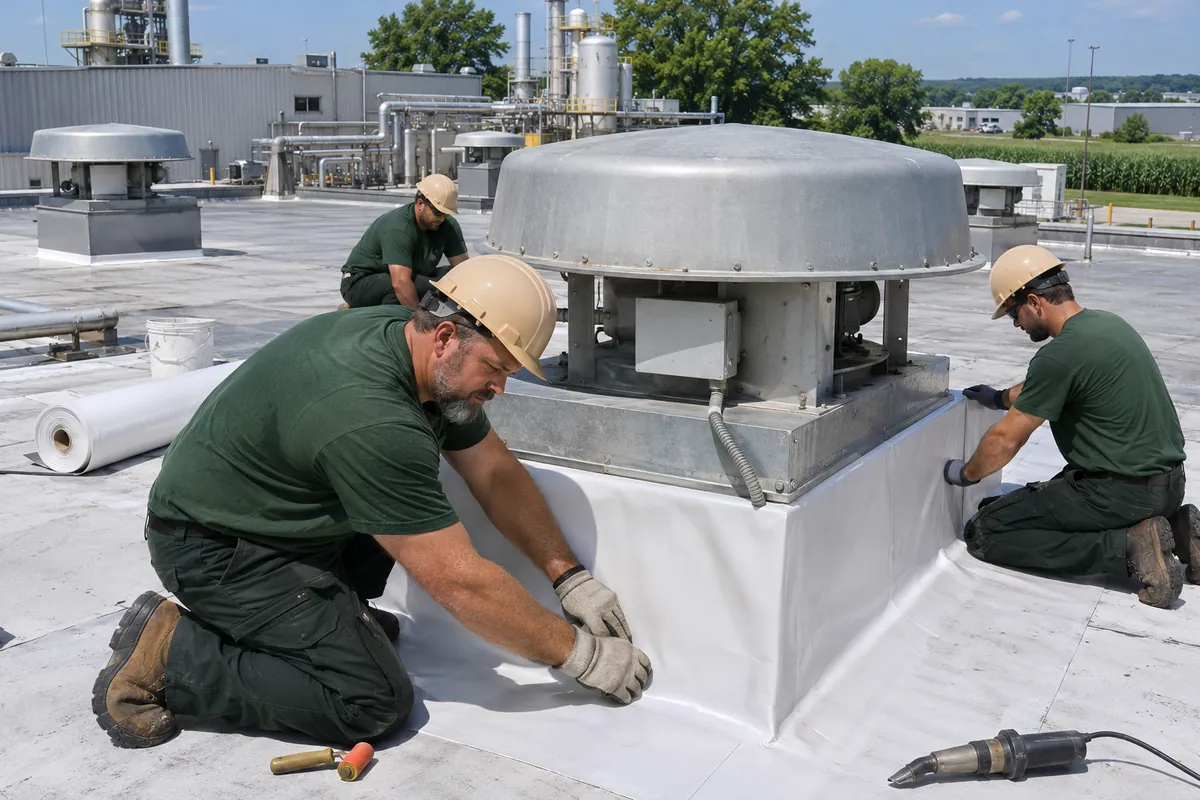
As an Evansville industrial roofing contractor, we install and replace roofs on plants and warehouses, flashing exhaust, ducts, and curbs while production keeps running.
Evansville industrial roofing covers plant and warehouse roofs where equipment, heat, and production shape every decision. These lists show the fit.
Plant roofs wear out around the equipment long before the open field fails.
Oily or chemical residue from exhaust softens many membranes. The ring of discolored roof around a fan is where seams and patches give out first.
Heavy units shake their curbs all day. Corners crack, counterflashing works loose, and the leak shows over the line, often far from the unit itself.
Hot stacks and vents bake the membrane around them. Brittle, shrunken roofing at the stack collar lets water down the outside of the pipe.
Old ducts and curbs left behind after equipment moves get capped with sheet metal and sealant. Those caps are among the most common leak sources on plant roofs.
Long roofs over loading docks often settle where trucks back in below. Water collects along the wall and soaks the insulation for yards inward.
Techs walk the same line to every unit. Without walkway pads, that path wears through the top surface and opens punctures nobody notices until rain.
Plant roofs mix systems and details more than other buildings do.
| Area | Typical Choice | Why |
|---|---|---|
| Open field | TPO, EPDM, or standing-seam metal | Deck type, slope, and what lands on the roof |
| Around exhaust | Membrane rated for the residue, plus sacrificial pads | Grease and chemicals soften standard sheets |
| Equipment curbs | Raised curbs with full membrane wraps | Vibration cracks thin corners and sealant |
| Service paths | Walkway pads welded or taped in place | Foot traffic wears a line to every unit |
| Old penetrations | Removed, decked, and roofed over | Capped holes leak more than open roof |
The gains show up on the plant floor as much as on the roof.
New curb flashing and closed penetrations stop the drips over lines and stock. Maintenance stops chasing tarps and buckets after storms.
Every unit gets a full membrane wrap on a curb sized for it. Service techs can work on equipment without opening the roof around it.
Walkway pads mark safe paths, and removed penetrations end the trip points. Roof access for maintenance gets simpler and safer.
Closeout includes a plan showing each curb, drain, and penetration. Engineering adds new equipment against it later.
Tell us the line and the units above it. We trace the water from the roof side and plan the repair or replacement around your shifts.
Planned with your plant staff before anyone climbs a ladder.
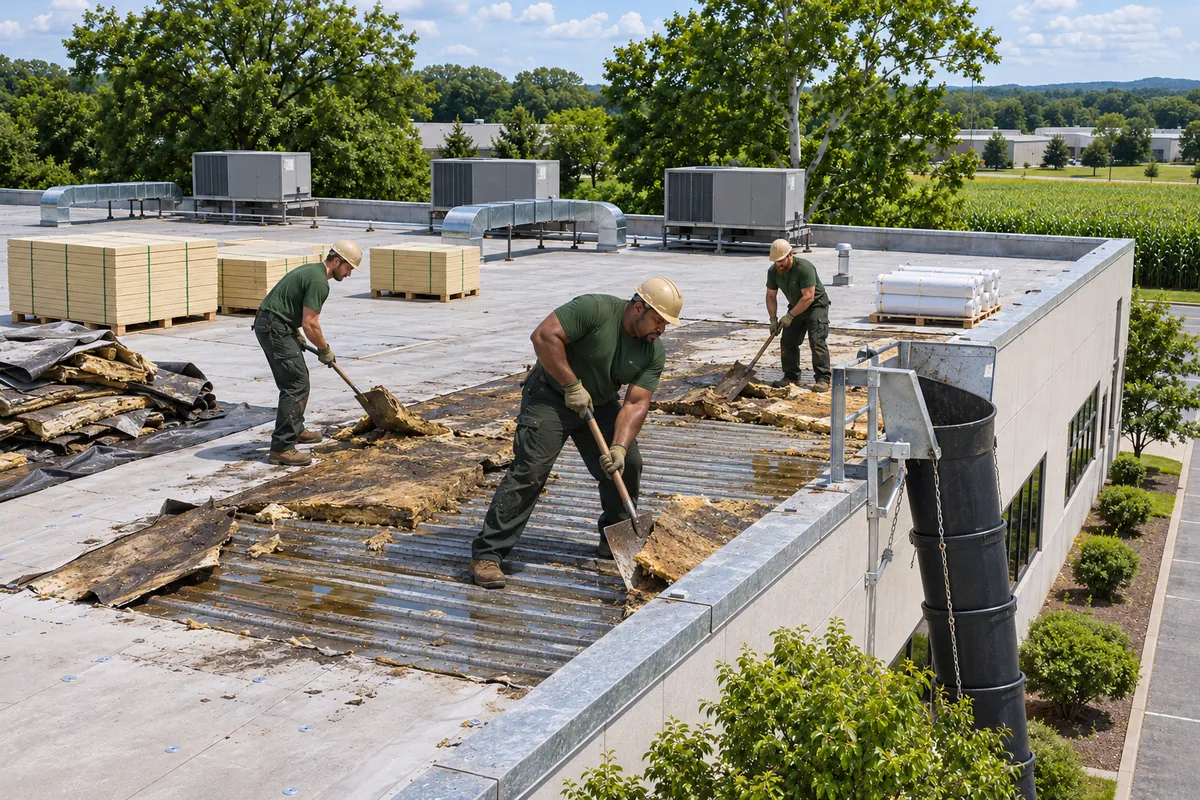
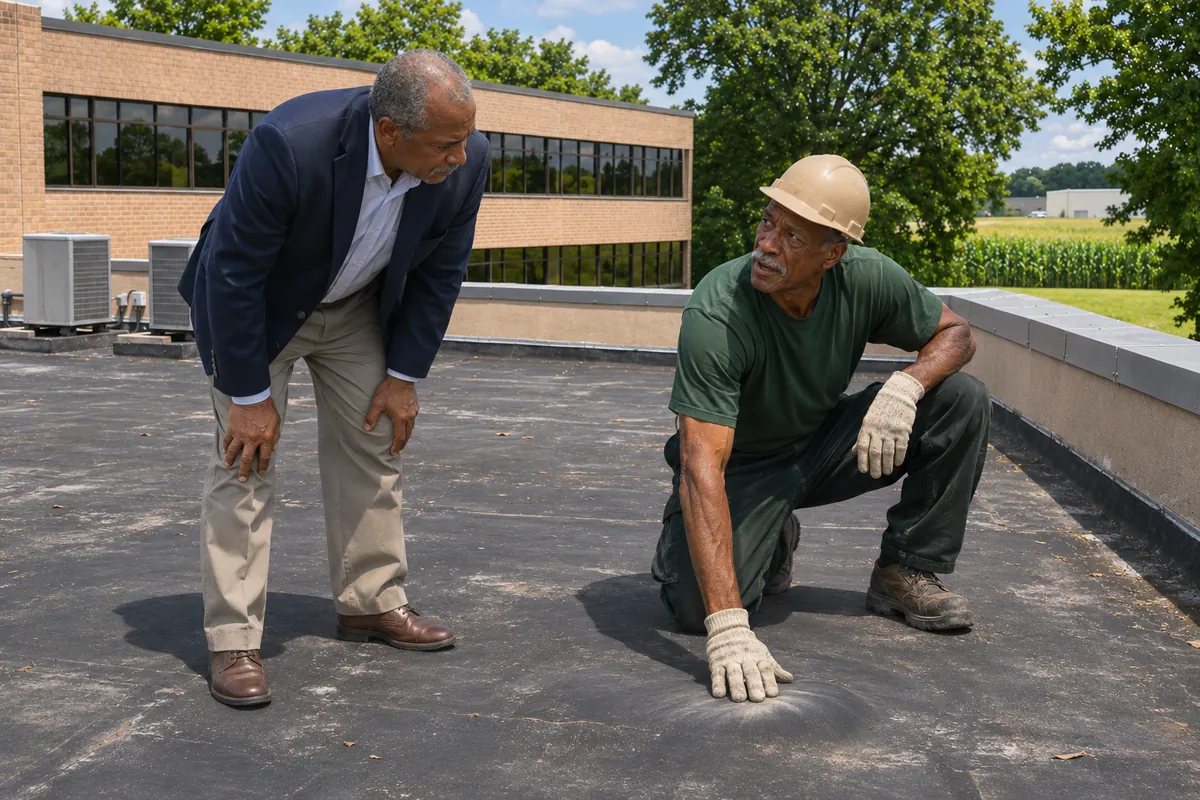
Cores, moisture readings, and a walk of every curb and stack show the roof's state. Equipment and access points go on a plan of the roof.
Sections are sized to close in one shift. Loud tear-off and odor-producing work are moved to the hours your plant chooses.
A unit is shut down only for its own flashing, then brought back up. Exhaust areas get the membrane rated for what they discharge.
Walkway pads go in last. The closeout plan shows every unit, drain, and penetration for your maintenance file.
Industrial roofs are built from these systems, chosen area by area.
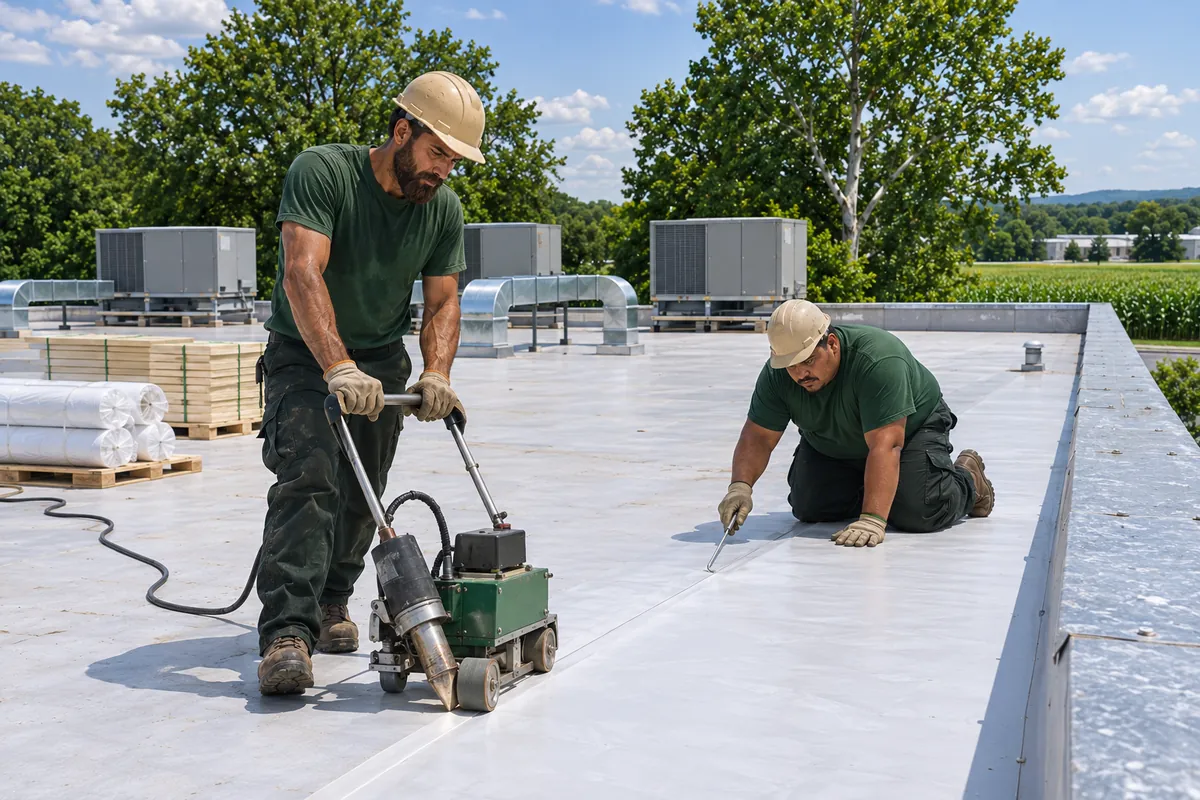
Welded white membrane covers most plant fields with cooled spaces below, with walkway pads welded straight to the sheet.
Evansville TPO roofing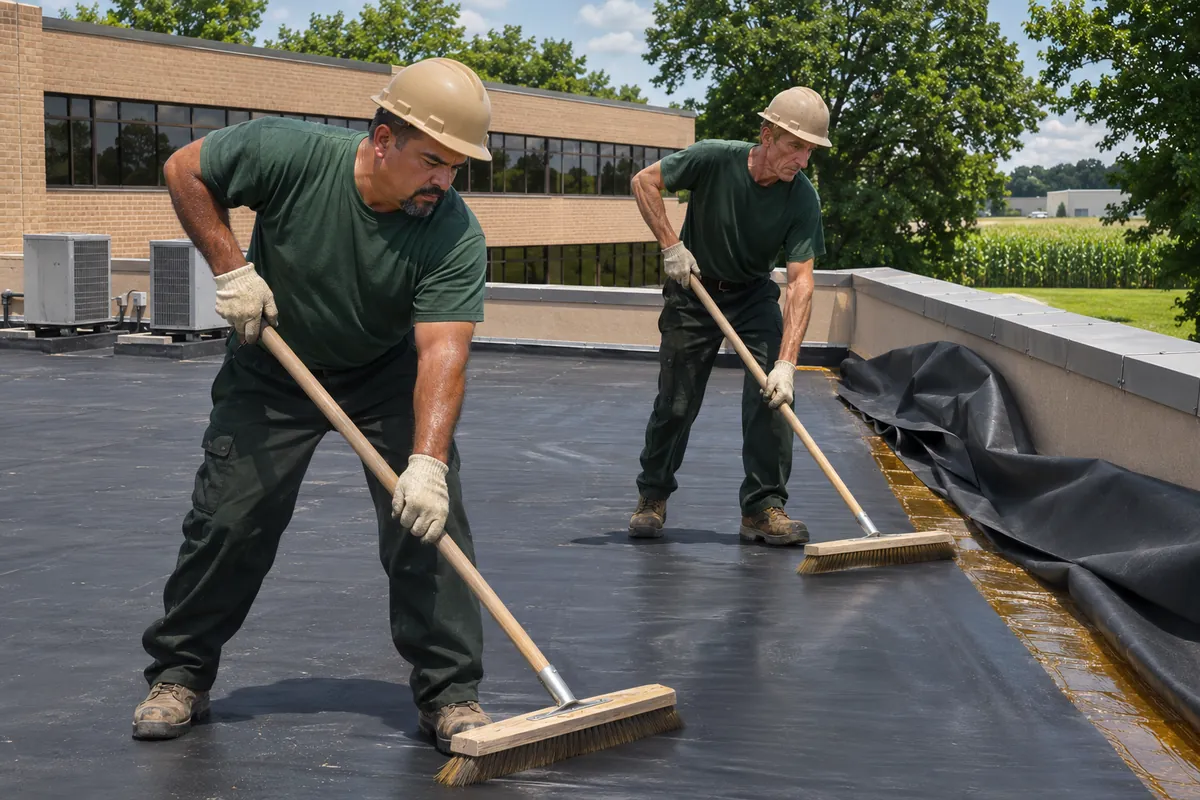
Rubber membrane fits plant offices and older flat sections where flexibility matters more than heat reflection.
Evansville EPDM roofing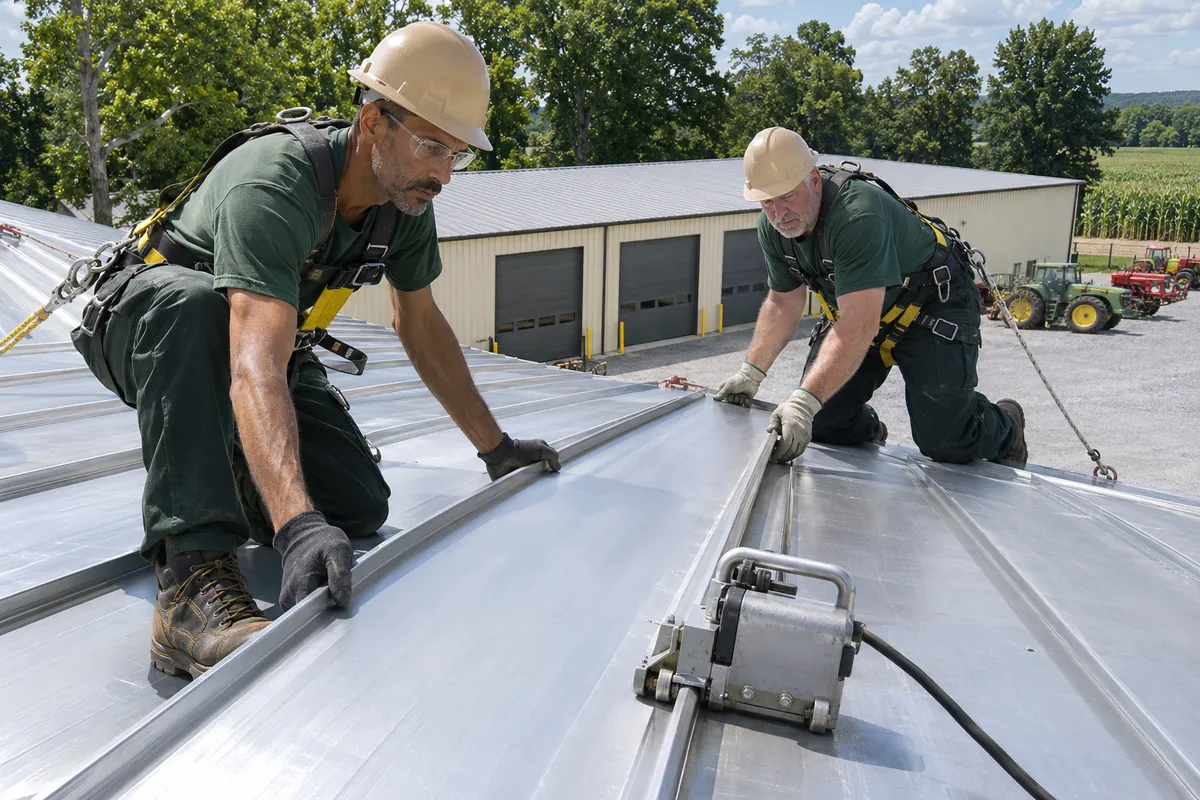
Standing-seam panels cover warehouse and storage wings, and retrofit framing can add slope over a ponding plant roof.
Evansville commercial metal roofingPlant managers ask these before scheduling roof work.
It is roofing for big low-slope and metal roofs on plants and warehouses, where heavy units, exhaust, vibration, and process heat wear on the roof. The work centers on heavier curb and duct detailing, walkway protection, and a schedule that follows production and plant safety rules.
The roof is cut into daily sections that are torn off and closed before roofers leave. Noisy or odorous work moves to times the plant picks. Each rooftop unit goes down only while it is flashed, and protection goes over active areas below where the plant asks for it.
Any roof that service techs cross to reach equipment benefits from them. Pads mark the safe route, spread foot traffic, and keep tools and boots off the field membrane. On plant roofs they usually run from the access hatch to each unit and around the curbs where work happens.
A written safety plan for work near running equipment, a schedule set around shifts, and protection for machines and stock below. The contractor should explain the system, the deck repairs, and how each unit gets flashed, then report daily while roofers are up top.
Size and height, the system, insulation, deck condition, how much equipment sits up there, and phasing around production set the price. Taller buildings add crane time and safety setup. A roof walk with your maintenance lead turns those into a written figure.
Yes, and it is one of the best times to do it. Abandoned curbs and capped ducts are removed, the deck opening is framed and decked, and the new roof runs straight across. We confirm with plant engineering which penetrations are truly dead before cutting anything.
Send the plant address and the areas that leak. We walk the roof with your maintenance lead and plan the work around production.
Or call (812) 682-5831