
Flashing Pulled From Masonry Walls
Older brick walls move, and base flashing pulls away from them. Water runs behind it and shows as stains high on interior walls.
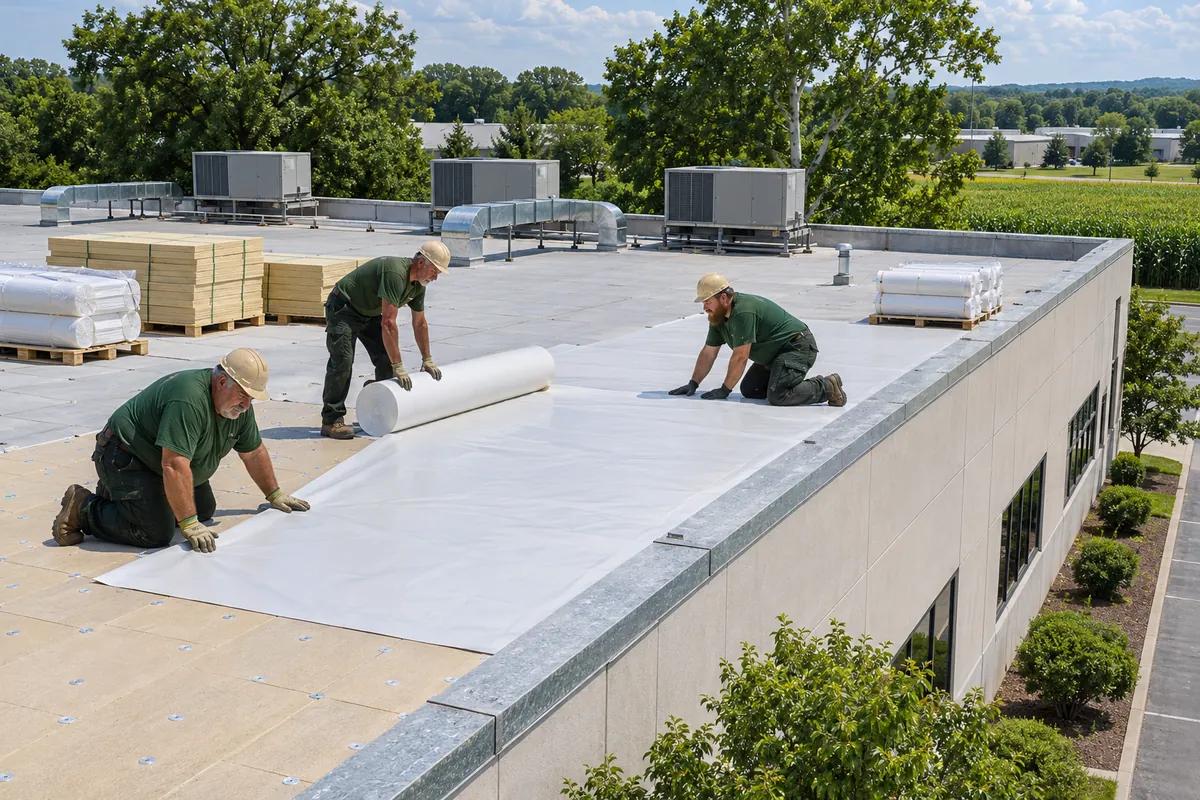
As a Tell City commercial roofing contractor, we install TPO, EPDM, and metal roofs on Perry County churches, schools, and civic buildings around their calendars.
Tell City commercial roofing often means working over people: congregations, students, and the public using a civic building during the day.
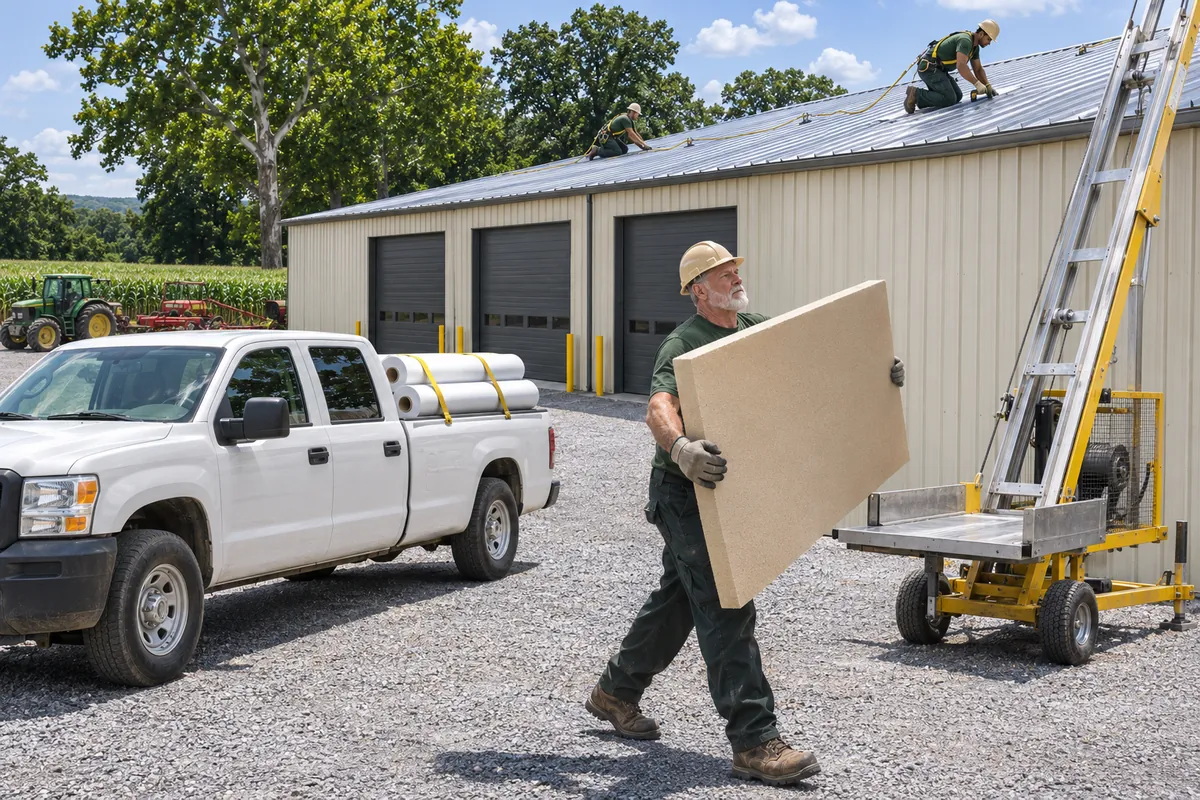
Before scheduling, we confirm whether the state plan review office or the local building office needs to see the reroof. Then we set work days around services, events, and class days on the calendar you give us.
Entrances get covered walkways or are closed in turn, adhesive odor is kept away from air intakes, and each section is sealed before people return.
What older civic, church, and school roofs in Perry County show.
Older brick walls move, and base flashing pulls away from them. Water runs behind it and shows as stains high on interior walls.
Churches and schools often join a pitched roof to a flat one. The valley where they meet catches debris and leaks first.
Cast-iron drain lines inside older buildings crack or clog. A clogged drain ponds the roof; a cracked one leaks inside.
Domed skylights and roof hatches dry out at the curb. Their gaskets and flashing leak over classrooms and halls.
Many flat roofs from that era carry little insulation. Replacing the roof is the time to add board up to the energy code.
Years of patching leave a roof with layers of mismatched material. New patches stop bonding to the old ones.
The gains that matter on buildings full of people.
Work set around your calendar keeps worship, school days, and public hours on schedule while the roof is replaced.
New flashing at masonry walls, skylights, and transitions closes the leak points that stain ceilings over rooms in use.
Replacement is the time to add board up to the energy code, so halls and classrooms hold heat better through Perry County winters.
Permit checks, the scope, and the closeout record give boards and trustees a full file on the roof.
Systems that suit churches, schools, and civic roofs.
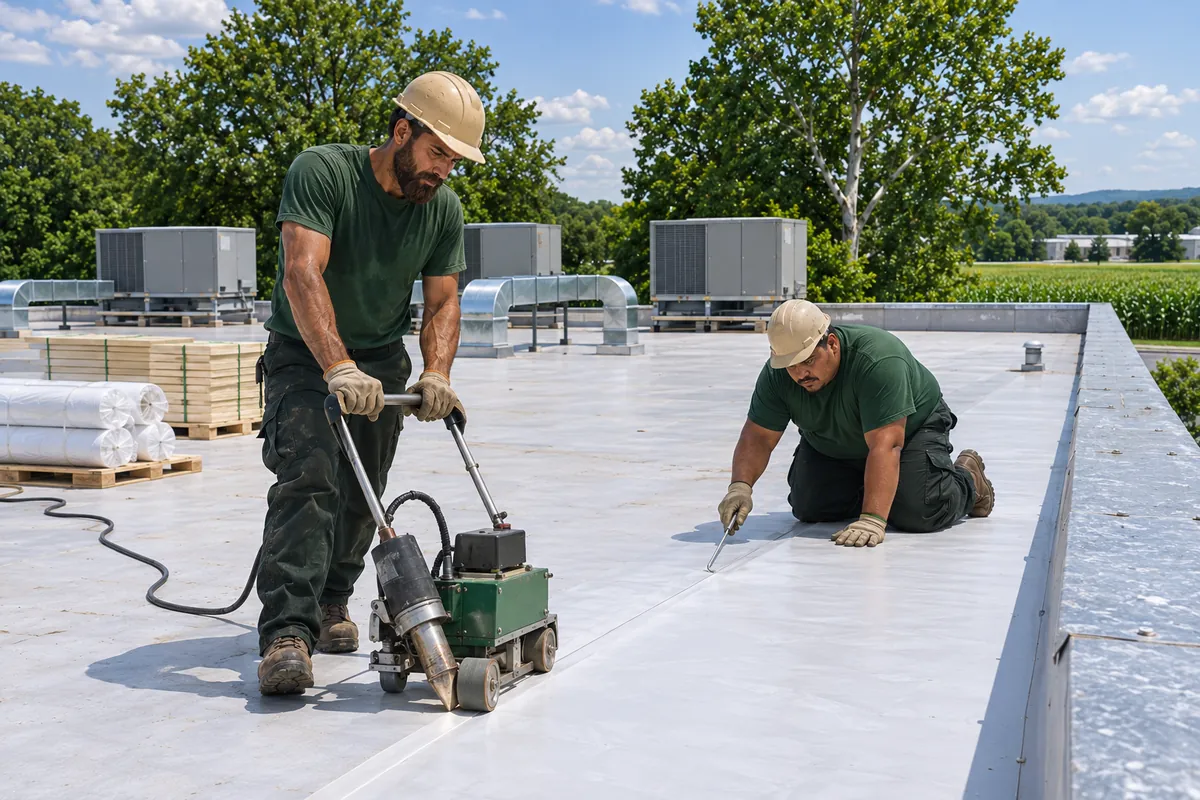
White TPO on Tell City school and civic flat roofs keeps rooms cooler in late summer and welds cleanly at skylights and hatches.
Evansville TPO roofing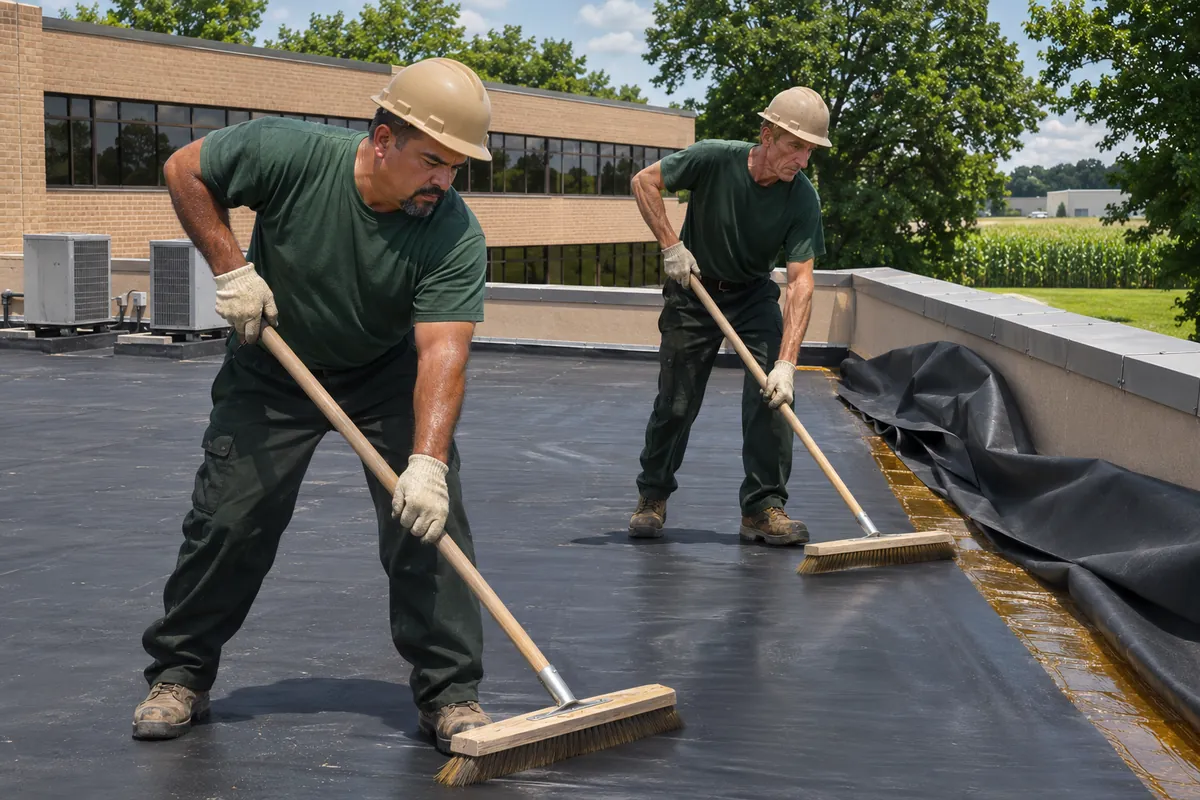
Adhered rubber membrane adds little weight to older church decks and flexes as the masonry building shifts.
Evansville EPDM roofing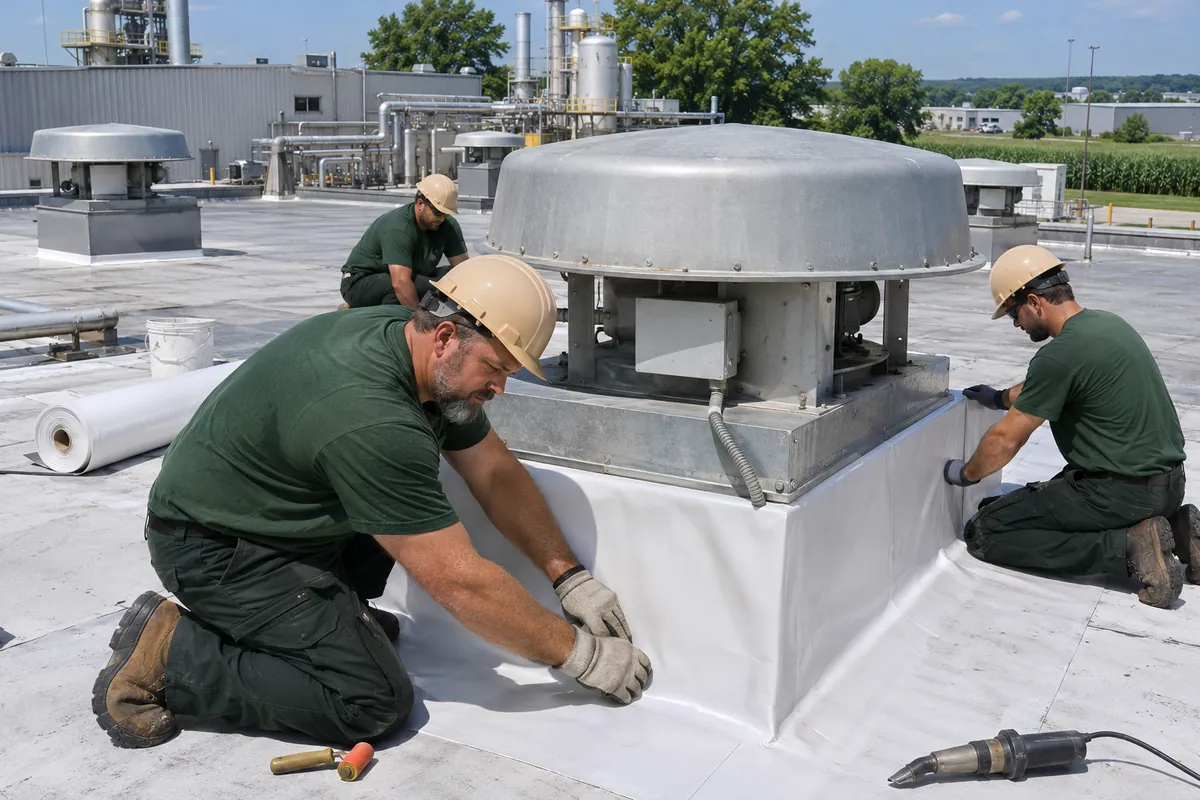
Perry County plants and shops with exhaust and heavy units get the industrial detail and shift phasing.
Evansville industrial roofing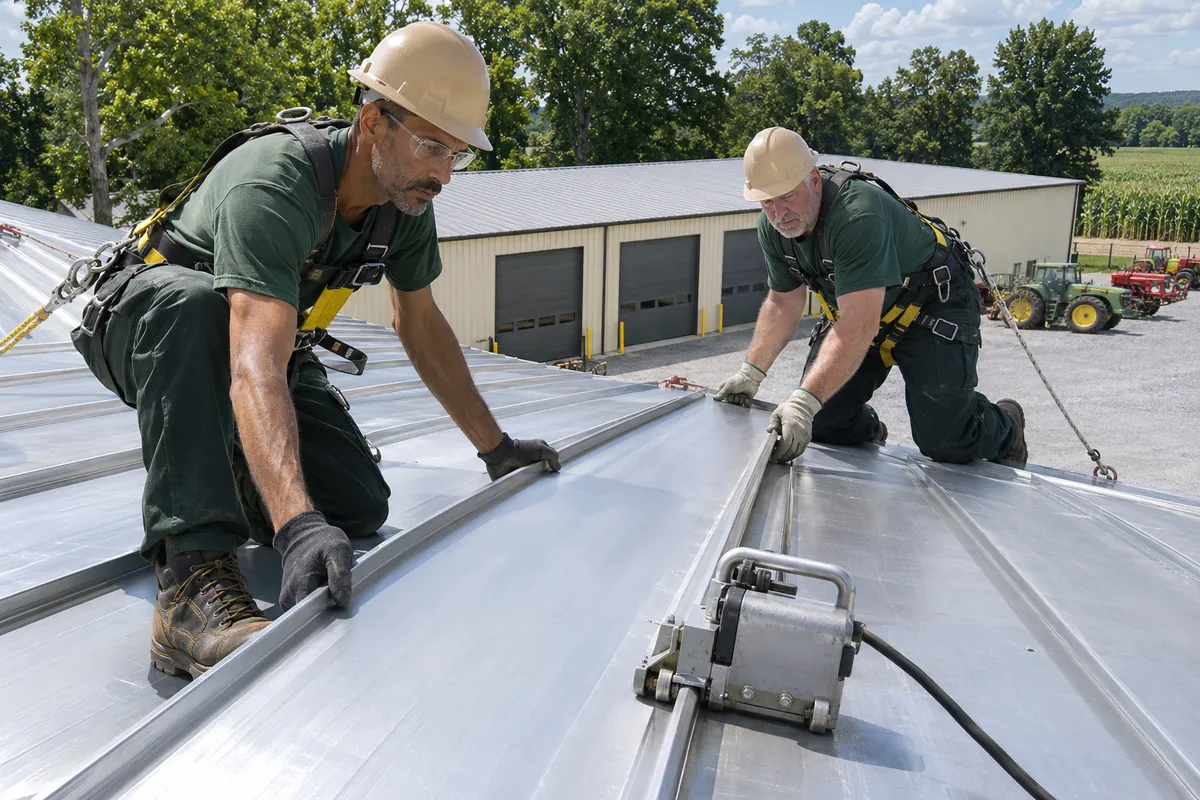
Standing-seam panels suit fellowship halls, gyms, and pitched sections where a long-lasting sloped roof fits.
Evansville commercial metal roofingSend the dates the building is free and the dates it is not. We plan the roof sections around them.
Four steps, timed to the building's calendar.
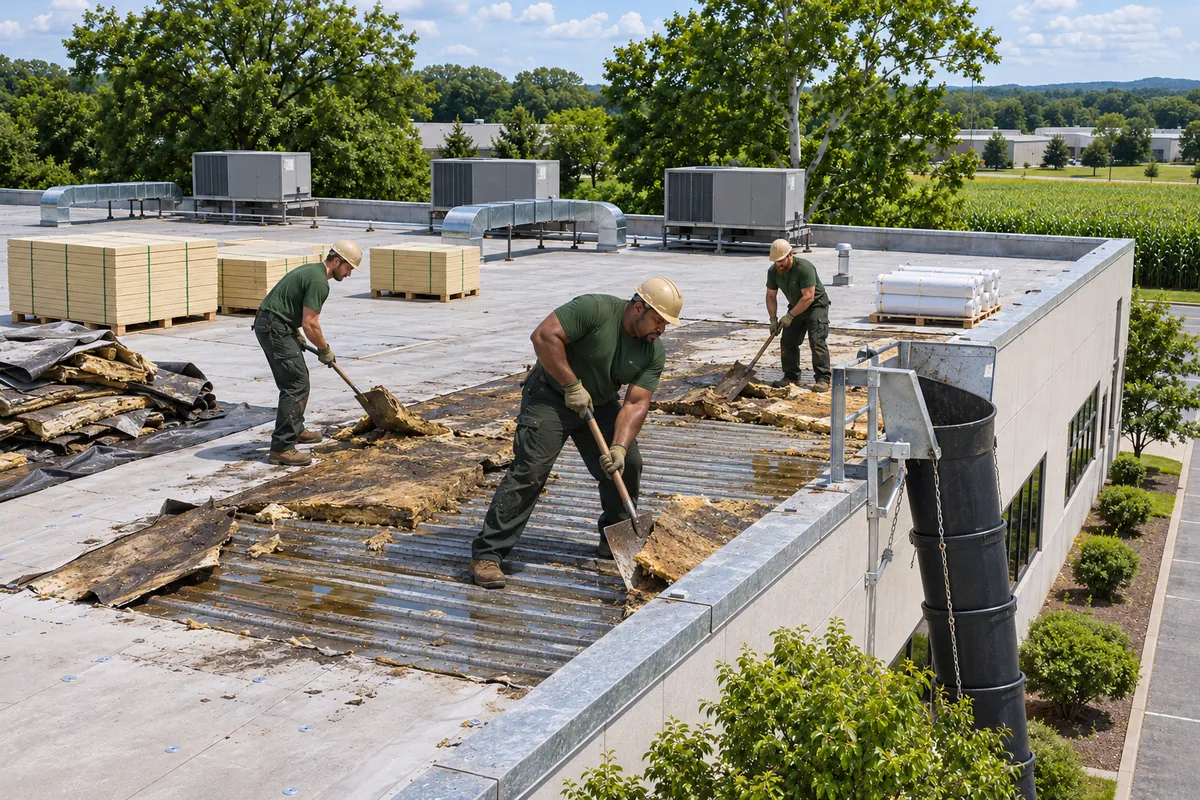
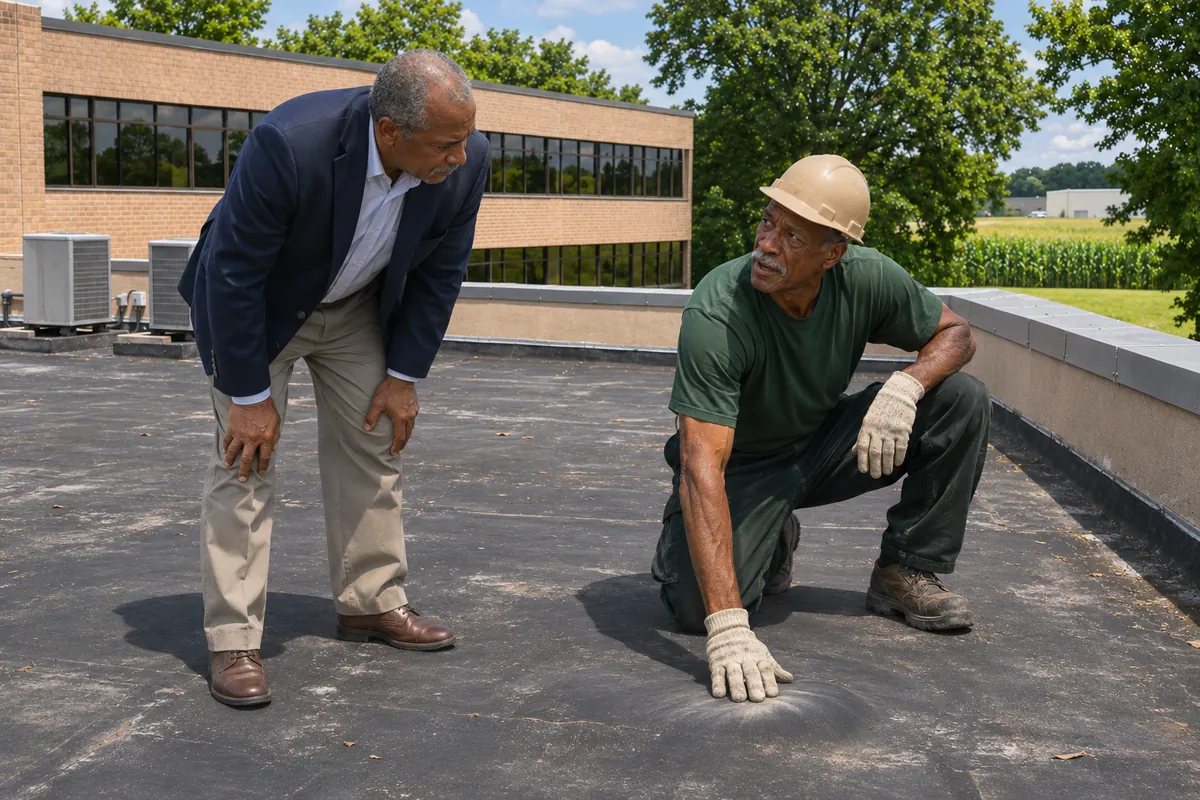
We walk the roof and the rooms below, core the field, and check walls, skylights, hatches, and drains.
Calls to the state plan review office and the local office settle whether the reroof needs filing.
Roof sections are matched to days the building is free or quiet, with entrances protected on the days it is in use.
Each section is sealed daily. At the end, we walk the roof with your trustee or facilities lead.
Churches, schools, and shops in these towns get the same care. Building elsewhere? Call us or send us a message.
Permit, schedule, and cost questions from Perry County.
Indiana's commercial code sits in 675 IAC 13, adopted by the Fire Prevention and Building Safety Commission, and the state reviews plans for Class 1 structures, which covers most commercial buildings. Whether a reroof needs a filing depends on its scope, so we check with the state office and the local one first.
Yes. TPO, EPDM, and metal roofs on commercial and industrial buildings in Tell City are part of the work. Each job starts with a roof survey to plan drainage, insulation, and the system that matches the building and its use. Owners just outside town can call to check whether we reach them.
Ask for a roof walk with cores, a written scope, and a schedule built around services and events. Ask how entrances and air intakes will be protected while people are inside. A trustee or facilities lead should walk the finished roof before the job closes.
Size, layers to remove, deck repairs, insulation added to meet the energy code, and the number of skylights, hatches, and wall flashings set the price. Weekend or off-hours work adds cost. A roof walk with cores turns those into a written price for your board.
It can, with sections over classrooms scheduled for weekends, breaks, or after hours, and work over gyms or storage on school days. Entrances in use get covered walkways. Many districts still prefer summer, so we lay out both options in the scope.
Yes. A roof can be split into a first phase over the sanctuary and a second over halls or offices, each with its own price. The tie-in between old and new roof is sealed so the part left for later stays dry until its turn.
A full scope covers tear-off or re-cover, insulation, the membrane or panels, and flashing at walls, curbs, and drains. For occupied buildings it also lists entrance protection and the work calendar. Every item is broken out by roof area.
Send the address and the dates the building is busy. We walk the roof and plan around them.
Or call (812) 682-5831